The Indian Ice Cream Expo (IICE) 2025, held at the Yashobhoomi Convention Centre in Dwarka from 6 to 8 October 2025, brought together the entire processing and supply chain of India’s ice cream industry under one roof. Among the exhibitors, packaging solution providers, especially those involved in in-mold labels (IML), formed the largest cluster.
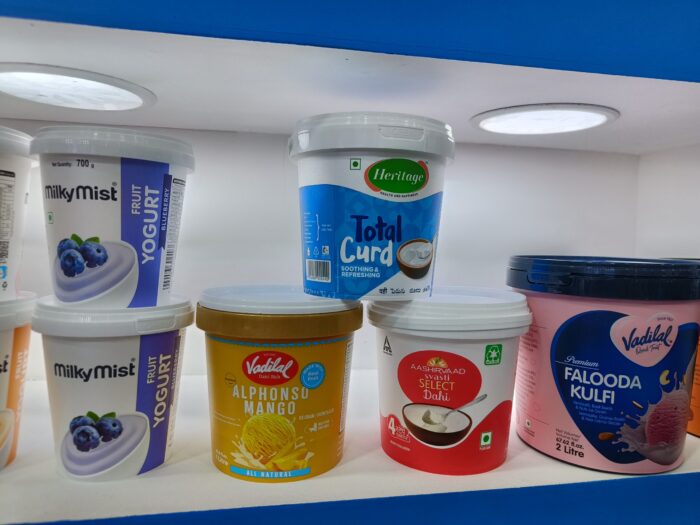
At the World Mithai and Namkeen expo in December 2024, IndiFoodBev witnessed a growth in the adoption of IML tubs, and the trend continued with Indusfood and Sial exhibitions. At the IICE this year, we spotted that not just ice-creams, quite a few ingredients and chocolate makers had started utilizing this format of packaging.

IML tubs have emerged as a preferred packaging format for ice-cream manufacturers seeking a combination of visual appeal, durability, and production efficiency. In this process, a pre-printed polypropylene label is placed inside the mold before the container is formed.
As the molten polymer is injected, the label bonds with the tub, creating a single unit. This structure gives the packaging a clean, premium look that is difficult to achieve through conventional post-mold labeling methods.
One of the biggest advantages of IML for ice-cream packaging is the superior branding it enables. The technique allows for high-resolution, photographic-quality graphics that remain intact even under deep-freeze conditions.
Labels do not peel, scratch, or wrinkle, which helps brands maintain a consistent appearance from the factory to the freezer to consumer use. This premium finish enhances shelf visibility and supports the rising trend of visually rich, impulse-driven purchasing in the frozen dessert category.
The tubs have a growing market in the sweet packaging industry because of its light-weight and tamper-free features. This form of packaging has replaced conventional tin packaging in many markets due to its appealing look and user convenience.
The marketers at the ice cream expo informed us that resealability is a dominating feature in these packs, in contrast to the tin cans or post-mold labeling.
As both the container and label are made from the same polypropylene material, the packaging withstands temperature fluctuations, moisture exposure, and manual handling without compromising its structural integrity. This compatibility makes the tubs recyclable, aligning with the increasing push for sustainable, mono-material packaging within the food industry.

In addition to aesthetics and durability, IML packaging offers practical benefits for manufacturers. The process allows for efficient production as decoration is integrated directly into molding, removing the need for secondary labeling lines.
Many IML tubs can be designed with built-in tamper-evident features, adding an extra layer of safety for consumers. Further, the technology supports a wide range of custom shapes and sizes, ranging from small 100 ml cups to large 5-liter containers.
The Delhi-based Kap Group, a packaging provider in F&B and HoReCa segments, was present with its in-mold label tubs (IML) for ice cream, dairy, FMCG, sweets, bakery, confectionery, oils, and ghee. Kap Group also produces laminated tubes of international standards serving cosmetics, pharmaceuticals, and other sectors that require premium packaging.
Bholakumar Sonar, area sales manager, Kap Cones (packaging sister concern of the group), said that the adoption of IML Tubs for food-based product packaging has picked up in recent years. “The ice-cream making industry in India is growing, and so is IML adoption. All major brands utilize this packaging for their high-quantity and premium flavor segments.”
Mold-Tek Packaging (MTPL), a rigid plastic packaging provider, is involved in the manufacturing of injection-molded containers for tubes, paints, food, and other products. MTPL has 10 processing plants and two stock points spread across India, enabling quick supplies. It has a huge injection molding capacity of around 50,000 TPA.
According to Anuj Chauhan, regional head, sales and marketing, IML packaging and its application in various industries are growing mainly due to two factors: the premium shelf appeal and the authentication feature that consumers have also started paying attention to. “Although the F&B industry is the biggest user, the applications are expanding to other household products as well.”
IndiFoodBev — authentic, impactful and influential
An English-language food and beverage processing and packaging industry B2B platform in print and web, IndiFoodBev is in its third year of publication. It is said that the Indian food and beverage industries represent approximately US$ 900 billion in revenues which implies more than 20% of the country’s GDP. Eliminating the wastage on the farmside can help to deliver more protein to a higher number of the population apart from generating sizable exports. The savings in soil, seeds, water, fertilizer, energy and ultimately food and nutrition could be the most immense contribution that country is poised to make to the moderation of climate change.
To improve your marketing and grow sales to the food and beverage processing and packaging industry, talk to us. Our research and consulting company IppStar [www.ippstar.org] can assess your potential and addressable markets in light of the competition. We can discuss marketing, communication, and sales strategies for market entry and growth.
Suppliers and service providers with a strategy and budget for targeted marketing can discuss using our hybrid print, web, video, and social media channels to create brand recognition linked to market relevance. Our technical writers are ready to meet you and your customers for content.
The second largest producer of fruit and vegetables in the world is continuously expanding processing capacities and delivery systems with appropriate innovative technologies. We cover product and consumer trends, nutrition, processing, research, equipment and packaging from farm to thali. Get our 2025 media kit and recalibrate your role in this dynamic market. Enhance your visibility and relevance to existing markets and turn potential customers into conversations. Ask for a sample copy of our bi-monthly in print or our weekly IndiFoodBev eZine each Wednesday.
For editorial info@ippgroup.in — for advertisement ads1@ippgroup.in and for subscriptions subscription@ippgroup.in
Naresh Khanna – 10 February 2025
Subscribe Now