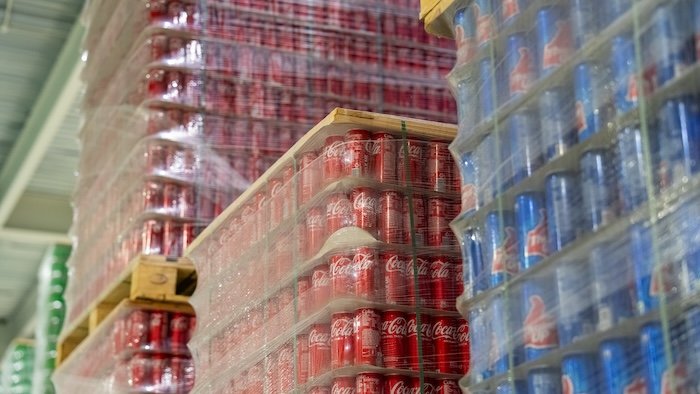
In a country where the beverage business is booming with the rise of its middle class, increasing awareness of health issues, and the insatiable appetite for bottled beverages, bottling has moved from simply putting liquids into bottles to doing so accurately every single time. In India’s factories, a major revolution is underway—precision bottling through automation, artificial intelligence, and IoT is swiftly changing the landscape.
For many years, bottling in India involved semi-automatic lines and a lot of human interaction as well as reactive quality control measures. Today, all that is beginning to drastically change. Through automation, robotic systems, and AI, it is possible to conduct filling, capping, labeling, and quality control with minimum human error.
Government programs such as ‘Make in India’ and ‘Production-Linked Incentives (PLIs)’ have started diverting investments toward homegrown capabilities. For instance, the precision tools market in India alone is set to increase from Rs116 billion in FY2024 to Rs183 billion in FY2030. Similarly, the global bottling machines market is growing at the same pace and is estimated to cross the US$ 6.30-billion mark by 2030. These figures are expected to register a CAGR of 5% between 2025 and 2030. Many leading beverage companies in India, ranging from multinational beverage producers to local firms, have started implementing smart sensors within their production facilities.
The precision imperative in modern bottling
The precision gains are not marginal. Modern filling systems that incorporate artificial intelligence can achieve precise fill volumes with less than half a percent of variance regardless of viscosity and temperature fluctuation. In terms of production facilities that handle hundreds of thousands of products each day, this is significant since it helps to minimize waste and adhere to regulations, resulting in better profit margin predictions.
The current bottling technology is not only focused on filling the bottles but also on providing consistency in their processing. Consistency starts with the material itself. State-of-the-art blow molding technology ensures uniform wall thickness of bottles. Engineers’ precision permeates every process from rinsing and filling to capping and labeling, all of which require micron-level tolerances due to computer-aided design and manufacturing systems. It is only such a strict measure that can help ensure the highest quality standards for each bottle, especially those manufactured for the food industry or the pharma industries.
Smart quality control: From inspection to intelligence
Quality inspection in bottling has now evolved from the process of manually inspecting bottles to using intelligent monitoring systems. In vision-based inspection, the systems have high-definition cameras that monitor various problems, including misalignment, labels, and any other surface defects.
IoT sensors also monitor the key process indicators throughout the process, including the fill volume, pressure, and presence of contaminants. These sensors can give instantaneous notifications on deviations and ensure compliance with all standards. The moment an issue is found, be it in seal, fill volume, or label positioning, the system automatically identifies the problem, which may be resolved before production is stopped.
Predictive maintenance, which is made possible through IoT analytics, is yet another area that is currently being adopted. Predictive maintenance involves detecting changes in the working of the machinery using sensors, thus avoiding machinery failure that could otherwise end up costing hundreds of thousands. Companies deploying such systems have seen unplanned downtime fall sharply, with some global benchmarks pointing to reductions of up to 45%.
Perhaps nowhere is the technology leap more visible than in quality control. Manual testing in the past was based on occasional sampling, an approach that is fundamentally inconsistent by nature. However, modern artificial intelligence-based computer vision algorithms can analyze up to hundreds of packages per minute on moving manufacturing conveyor belts, picking out any faults, like underfilling, contamination, mislabelling, or broken seals. The ability to catch and reject a non-conforming unit in milliseconds, rather than during an end-of-line audit, is the difference between a quality culture and a quality crisis.
At the leading edge of Indian manufacturing, digital twin technology is beginning to take root. A digital twin, or a computer simulation of the entire bottle-filling assembly, enables engineers to experiment with different processes, conduct tests for new parameters, and discover any bottlenecks without disrupting the production process.
The Way Forward
By choosing to upgrade their bottling technology at this time, Indian bottling companies would be doing more than improving their machinery; they would be changing their competitive stance. The need for verification and visibility in modern supply chains means that the smart bottling line can no longer be seen as a nicety but as essential.
As the bottling industry moves ahead, the inclusion of smart technology and analytics along with digital marketing techniques will help to further raise standards in the industry. This is where Indian bottling companies need to begin. In India’s ambition to become a global manufacturing leader, that foundation may well be the decisive differentiator.
The author is director at SLMG Beverages, Coca-Cola’s bottling partner in India
IndiFoodBev — authentic, impactful and influential
An English-language food and beverage processing and packaging industry B2B platform in print and web, IndiFoodBev is in its third year of publication. It is said that the Indian food and beverage industries represent approximately US$ 900 billion in revenues which implies more than 20% of the country’s GDP. Eliminating the wastage on the farmside can help to deliver more protein to a higher number of the population apart from generating sizable exports. The savings in soil, seeds, water, fertilizer, energy and ultimately food and nutrition could be the most immense contribution that country is poised to make to the moderation of climate change.
To improve your marketing and grow sales to the food and beverage processing and packaging industry, talk to us. Our research and consulting company IppStar [www.ippstar.org] can assess your potential and addressable markets in light of the competition. We can discuss marketing, communication, and sales strategies for market entry and growth.
Suppliers and service providers with a strategy and budget for targeted marketing can discuss using our hybrid print, web, video, and social media channels to create brand recognition linked to market relevance. Our technical writers are ready to meet you and your customers for content.
The second largest producer of fruit and vegetables in the world is continuously expanding processing capacities and delivery systems with appropriate innovative technologies. We cover product and consumer trends, nutrition, processing, research, equipment and packaging from farm to thali. Get our 2025 media kit and recalibrate your role in this dynamic market. Enhance your visibility and relevance to existing markets and turn potential customers into conversations. Ask for a sample copy of our bi-monthly in print or our weekly IndiFoodBev eZine each Wednesday.
For editorial info@ippgroup.in — for advertisement ads1@ippgroup.in and for subscriptions subscription@ippgroup.in
Naresh Khanna – 10 February 2025
Subscribe Now