India’s growing demand for protein is running into a global squeeze in whey supply, exposing structural weaknesses in the country’s dairy sector and pushing up costs for both consumers and manufacturers.

India is the world’s largest milk producer but at the same time relies heavily on imports for premium-quality whey protein, a crucial ingredient in supplements and fortified foods. Industry estimates indicate that nearly 80 to 90% of India’s supplement-grade whey is imported, mainly from the US, Europe, Australia and New Zealand, Business Standard reported.
This reliance is now pinching pockets as global prices surge due to tight supply and strong demand.
Whey protein prices have climbed to record highs worldwide, rising over the past year due to increased consumption and limited production capacity, according to AP. In the US, whey protein concentrate with 80% protein is trading above US$13 per pound, representing a 250% Y-o-Y increase, while whey isolate prices have risen by 150%, according to consulting firm Ever.Ag data.
A similar pattern prevails across Europe, with prices more than doubling in under a year, AP reported, citing commodity pricing firm DCA Market Intelligence.
According to The Guardian, whey prices have surged up to fivefold in certain markets, with supply struggling to match demand. Suppliers have already sold out for parts of 2026, underscoring the severity of the shortage.
At the core of this global demand spike is a shift in consumer attitudes toward protein.
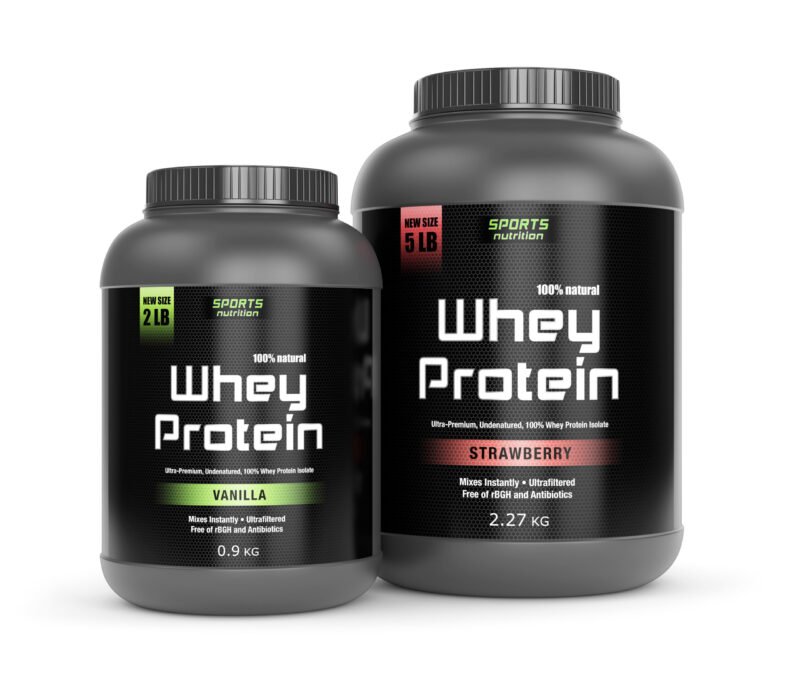
Whey protein was previously associated mainly with athletes and bodybuilders. However, with growing health awareness, it has now found its place in everyday foods — cereals, chips, coffee, baked goods, etc, AP reported. The average US supermarket now carries tens of thousands of products promoting protein content.
Another key factor is the rapid uptake of GLP-1 weight-loss drugs such as Wegovy and Mounjaro. These drugs reduce appetite, encouraging users to focus on nutrient-dense foods, especially protein, to preserve muscle mass, according to AP and The Guardian.
Estimates suggest that up to 6% of obese and diabetic patients in the US — potentially higher when including off-label use — are now using such drugs, significantly increasing protein demand, AP reported, citing Morgan Stanley.
Effect on India
This global trend is directly affecting India.
Domestic prices for whey protein concentrate have risen from around Rs 700-800 per kg until 2024 to over Rs 2,000-2,300 per kg, while whey isolate prices have nearly tripled in the past two years, Business Standard reported, citing industry executives.
Input costs for Indian companies have increased by as much as 200-250% over the past 24 months due to global demand, freight challenges and currency pressures, the newspaper reported. As a result, consumer prices for protein supplements in India have gone up by 15-25%, with some brands turning to blends or plant-based alternatives to manage costs.
However, the shortage is not driven by global demand alone — it also highlights structural limitations in India’s dairy ecosystem.
“Milk volume and supplement-grade whey are two entirely different discussions,” Business Standard quoted Ranjith Mukundan, CEO of Stellapps Technologies, as saying.
Whey suitable for supplements — known as “sweet whey” — is produced during cheese manufacturing. But cheese makes up less than 3% of India’s milk processing, limiting the country’s supply of usable whey. Most Indian dairy output focuses on liquid milk, curd, paneer and ghee, which produce ‘acid whey’ – not suitable for high-end protein supplements.
Akshali Shah, executive director at Parag Milk Foods, told Business Standard that India’s dairy industry has historically focused on fresh dairy consumption, unlike Western markets where cheese production developed much earlier.
This mismatch explains why India, despite its large milk production, remains one of the fastest-growing importers of whey protein.
On the other hand, Western markets developed large-scale cheese industries decades ago, creating strong whey-processing infrastructure alongside them, Business Standard noted.
Technical issues
There are also technical and regulatory challenges. Producing supplement-grade whey requires advanced filtration, spray drying and strict quality control systems. It also depends on consistent, high-quality raw milk — an area where India still faces issues such as gaps in cold chain infrastructure and variability in quality.
Setting up whey processing plants requires significant investment, with estimates ranging from Rs 60. crore to Rs 250 crore, depending on the level of refinement, according to Business Standard.
Globally, supply constraints are also linked to how whey is produced. Whey is a byproduct of cheese-making: for every pound of cheese, roughly nine pounds of whey are generated, according to the US Department of Agriculture, as cited by AP.
While cheese consumption remains strong, particularly in the US, more whey is being retained domestically to meet internal demand, reducing exports.
US exports of whey protein to China, for example, dropped 47% in early 2025 compared to the previous year, according to AP, citing Vesper data. This has forced buyers such as China to turn to Europe, further tightening global supply. “There simply isn’t enough product,” Jasper Endlich, a dairy analyst at Vesper, told AP.
Writing along similar lines, The Guardian noted that manufacturers are struggling to build inventories as demand continues to outpace supply.
Smaller businesses are especially affected, with some reporting they are paying double for whey compared to previous quarters, while larger firms are better positioned to absorb rising costs and secure supply, The Guardian reported.
Companies are exploring alternatives as a result, with some manufacturers reformulating products to include blends of whey and milk protein to reduce costs while maintaining nutritional value, according to The Guardian. Others are turning to plant-based proteins.
In India, the current situation is increasingly seen as an opportunity. Rising import costs and strong domestic demand are prompting Indian dairy companies to consider investing in local whey production capacity.
India could have imported around 23,000 tons of whey protein in 2025, up about 20% from the previous year, Business Standard reported.
At the same time, the domestic whey protein market is expected to grow from US$9.2 crore in 2023 to over US$12.5 crore by 2030, indicating strong long-term demand.
Industry leaders argue that with the right investments — in cheese production, processing infrastructure, milk quality and regulatory standards — India could gradually reduce its dependence on imports.“This is a window, not a destination,” Mukundan told Business Standard, adding that the next five years will be crucial.
No relief soon
Globally, relief is unlikely soon. Companies are investing in expanding whey production capacity, but new facilities will take time to become operational. For example, Ireland-based Glanbia plans to expand production in the US, but additional capacity is not expected until 2027, according to AP.
Until then, high prices and tight supply are likely to continue. “The supply-demand balance may begin to improve, but… these changes will take time,” Kathleen Wolfley of Ever.Ag told AP.
For India, this means managing an extended period of elevated costs while deciding whether to build the domestic capabilities needed to compete in an increasingly protein-driven global market.
(Based on reports in AP, Business Standard and The Guardian)
IndiFoodBev — authentic, impactful and influential
An English-language food and beverage processing and packaging industry B2B platform in print and web, IndiFoodBev is in its third year of publication. It is said that the Indian food and beverage industries represent approximately US$ 900 billion in revenues which implies more than 20% of the country’s GDP. Eliminating the wastage on the farmside can help to deliver more protein to a higher number of the population apart from generating sizable exports. The savings in soil, seeds, water, fertilizer, energy and ultimately food and nutrition could be the most immense contribution that country is poised to make to the moderation of climate change.
To improve your marketing and grow sales to the food and beverage processing and packaging industry, talk to us. Our research and consulting company IppStar [www.ippstar.org] can assess your potential and addressable markets in light of the competition. We can discuss marketing, communication, and sales strategies for market entry and growth.
Suppliers and service providers with a strategy and budget for targeted marketing can discuss using our hybrid print, web, video, and social media channels to create brand recognition linked to market relevance. Our technical writers are ready to meet you and your customers for content.
The second largest producer of fruit and vegetables in the world is continuously expanding processing capacities and delivery systems with appropriate innovative technologies. We cover product and consumer trends, nutrition, processing, research, equipment and packaging from farm to thali. Get our 2025 media kit and recalibrate your role in this dynamic market. Enhance your visibility and relevance to existing markets and turn potential customers into conversations. Ask for a sample copy of our bi-monthly in print or our weekly IndiFoodBev eZine each Wednesday.
For editorial info@ippgroup.in — for advertisement ads1@ippgroup.in and for subscriptions subscription@ippgroup.in
Naresh Khanna – 10 February 2025
Subscribe Now