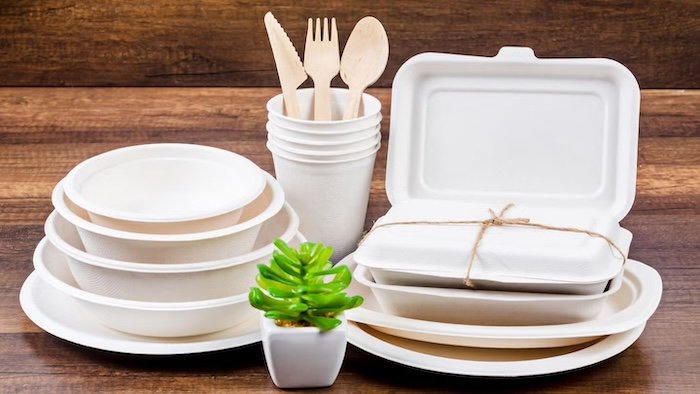
A new study from UPM Specialty Materials and global consultancy Smithers points to changing dynamics in the food packaging landscape, with fiber-based materials taking the leading share by 2045, recycling rates climbing toward 37%, and a regulatory landscape where sustainability becomes a strict government mandate.
Fiber-based food packaging is on course to become the leading sustainable material by 2045, driven by breakthrough barrier coating technologies, tightening global regulation, and a decisive consumer shift away from single-use plastics. These are among the key findings of the new global study published today by UPM Specialty Materials and Smithers.
More than 230 global packaging professionals from across the value chain contributed to a collective assessment of the key trends projected to drive sustainability in food packaging by 2045.
According to the survey, respondents see strong interest in fiber-based packaging, with its share of the global food packaging market is expected to rise from 37% today to 42% by 2045. 71% of respondents expect fiber-based packaging to be perceived as the most sustainable solution, citing advances in barrier coatings set to unlock food applications that were previously the exclusive domain of plastics.
“We’re encouraged to see strong momentum behind fiber-based packaging, driven by regulation, consumer demand, and ongoing innovation in barrier technologies. Our role is to support customers in this transition with high-performance, sustainable solutions that do not compromise on functionality.” says Janne Varvemaa, director, Products and Technology, UPM Specialty Materials.
The study outlines a future in which sustainability becomes a strict government mandate, not a brand differentiator: 71% of those surveyed believe this is likely, and 88% expect it to fundamentally reshape packaging choices. Extended Producer Responsibility (EPR) schemes and eco-modulation fees are projected to become a primary driver of material selection, rewarding recyclable, high-performance solutions and penalizing hard-to-recycle alternatives.
Recycling rates are forecast to climb from 31% in 2030 to 37% by 2045. Yet challenges remain, with respondents expecting that landfilling and incineration will persist. Outcomes vary significantly by region, with Europe leading in recycling while the US and Asia-Pacific face distinct infrastructure and regulatory hurdles. Overall, the findings underscore the urgency of accelerating innovation and development globally.
“The evidence is clear that the industry will continue to focus on improving recycling rates and regulations, particularly EPR and eco-modulation are directly influencing material choices. Ongoing innovation in barrier technologies is also opening up new applications for fibre-based packaging to compete with plastic alternatives.” says Ciaran Little, VP, Global Consulting Information Division, Smithers.
IndiFoodBev — authentic, impactful and influential
An English-language food and beverage processing and packaging industry B2B platform in print and web, IndiFoodBev is in its third year of publication. It is said that the Indian food and beverage industries represent approximately US$ 900 billion in revenues which implies more than 20% of the country’s GDP. Eliminating the wastage on the farmside can help to deliver more protein to a higher number of the population apart from generating sizable exports. The savings in soil, seeds, water, fertilizer, energy and ultimately food and nutrition could be the most immense contribution that country is poised to make to the moderation of climate change.
To improve your marketing and grow sales to the food and beverage processing and packaging industry, talk to us. Our research and consulting company IppStar [www.ippstar.org] can assess your potential and addressable markets in light of the competition. We can discuss marketing, communication, and sales strategies for market entry and growth.
Suppliers and service providers with a strategy and budget for targeted marketing can discuss using our hybrid print, web, video, and social media channels to create brand recognition linked to market relevance. Our technical writers are ready to meet you and your customers for content.
The second largest producer of fruit and vegetables in the world is continuously expanding processing capacities and delivery systems with appropriate innovative technologies. We cover product and consumer trends, nutrition, processing, research, equipment and packaging from farm to thali. Get our 2025 media kit and recalibrate your role in this dynamic market. Enhance your visibility and relevance to existing markets and turn potential customers into conversations. Ask for a sample copy of our bi-monthly in print or our weekly IndiFoodBev eZine each Wednesday.
For editorial info@ippgroup.in — for advertisement ads1@ippgroup.in and for subscriptions subscription@ippgroup.in
Naresh Khanna – 10 February 2025
Subscribe Now