Odisha is laying the foundations for a more diversified and resilient agricultural economy after an ICRISAT-supported decentralized seed production system generated more than 2,000 metric tonnes of quality groundnut seeds, enabling the rapid expansion of oilseed cultivation across the state.

The initiative is helping address one of Odisha’s longstanding agricultural challenges.
While the state has become one of India’s leading rice producers, more than doubling production from 46.14 lakh metric tonnes in 2000–01 to 115 lakh metric tonnes in 2022–23, it continues to face an estimated 20 percent deficit in oilseed production, increasing reliance on imported edible oils, and creating pressure on government procurement systems.
To reverse this imbalance, the Government of Odisha, through its SAMRUDHI Policy 2020, partnered with the International Crops Research Institute for the Semi-Arid Tropics (ICRISAT) to build a decentralized seed production system to support large-scale crop diversification into high-value oilseed crops.
The initiative directly complements India’s National Mission on Edible Oils–Oilseeds (NMEO-OS), which seeks to strengthen domestic edible oil production, improve national food security and reduce dependence on imports.
“Reliable access to quality seed is the foundation of successful crop diversification,” said Dr Manzoor Dar, global seed systems specialist at ICRISAT.
“We have established decentralized seed production systems in Odisha, which are creating sustainable local seed supply that enables farmers to confidently adopt improved oilseed varieties, increase productivity, and build a stronger regional oilseed economy,” said Dar.
Working with the Department of Agriculture & Farmers’ Empowerment (DA&FE), the Odisha State Seeds Corporation (OSSC) and the Odisha State Seed & Organic Products Certification Agency (OSSOPCA), ICRISAT evaluated high-performing groundnut varieties and sunflower hybrids suited to Odisha’s diverse agroecological conditions.
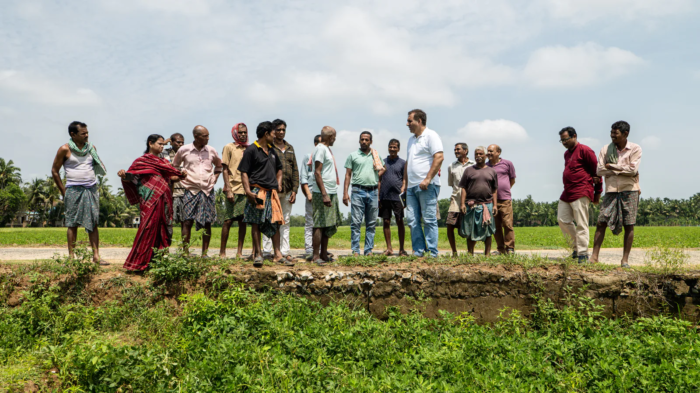
Four districts, Bargarh, Kalahandi, Nuapada and Keonjhar, were identified as high-potential seed production hubs, where farmers received early-generation genetically pure seed of improved groundnut and sunflower varieties.
Community-based seed production was supported through technical guidance and continuous field monitoring. The program strategically aligned seed production with the Kharif season, ensuring quality seed was available for the following Rabi planting season, a critical factor for groundnut, whose seed cannot be stored safely under high-moisture conditions for extended periods.
“As of June 2026, nearly 2,000 hectares are under decentralized seed production, generating more than 2,000 metric tonnes of quality seed for Rabi cultivation,” said Chakradhar Panda, seed system coordinator, ICRISAT.
“Our approach has demonstrated that locally produced quality seed, combined with technical support and strong market linkages, can successfully introduce oilseed cultivation into non-traditional production areas,” said Panda.
The quality seed is procured by the Odisha State Seeds Corporation and distributed to farmers across the state, creating a reliable pipeline for expanding commercial groundnut production.
Voices from the Field
For Arun Kumar Mohanty, a farmer from Balasore, cultivating sunflowers for oilseed represents both an opportunity to improve their livelihoods and a journey of learning and adaptation.
A major catalyst for adoption has been the convergence of Odisha’s crop diversification strategy with the Government of India’s National Mission on Edible Oils–Oilseeds.
The mission has strengthened farmer capacity through large-scale frontline demonstrations while investing in seed hubs, storage infrastructure and market linkages across the state.
Equally important has been the introduction of assured government procurement under the Minimum Support Price (MSP) system.
Procurement through the National Agricultural Cooperative Marketing Federation of India (NAFED) and its eSamridhi platform has reduced market risk, providing farmers with greater confidence to diversify beyond traditional rice production.
The combination of quality seed, technical support and assured markets is creating new economic opportunities for farming communities while strengthening Odisha’s emerging oilseed value chain.
Speaking on the milestone, ICRISAT Director General Dr Himanshu Pathak commended the Government of Odisha and its partners for demonstrating how strategic investment in agricultural innovation can strengthen farmer incomes while advancing India’s edible oil self-reliance.
“When farmers have access to quality seed, trusted science and reliable markets, agriculture becomes an engine of economic growth.
“Odisha has brought those elements together, creating a practical pathway to reducing India’s dependence on imported edible oils,” said Dr Pathak.
As India accelerates efforts to reduce its dependence on imported edible oils, Odisha’s experience provides a practical model for expanding domestic production through stronger seed systems, farmer-focused policies and market-led crop diversification.
IndiFoodBev — authentic, impactful and influential
An English-language food and beverage processing and packaging industry B2B platform in print and web, IndiFoodBev is in its third year of publication. It is said that the Indian food and beverage industries represent approximately US$ 900 billion in revenues which implies more than 20% of the country’s GDP. Eliminating the wastage on the farmside can help to deliver more protein to a higher number of the population apart from generating sizable exports. The savings in soil, seeds, water, fertilizer, energy and ultimately food and nutrition could be the most immense contribution that country is poised to make to the moderation of climate change.
To improve your marketing and grow sales to the food and beverage processing and packaging industry, talk to us. Our research and consulting company IppStar [www.ippstar.org] can assess your potential and addressable markets in light of the competition. We can discuss marketing, communication, and sales strategies for market entry and growth.
Suppliers and service providers with a strategy and budget for targeted marketing can discuss using our hybrid print, web, video, and social media channels to create brand recognition linked to market relevance. Our technical writers are ready to meet you and your customers for content.
The second largest producer of fruit and vegetables in the world is continuously expanding processing capacities and delivery systems with appropriate innovative technologies. We cover product and consumer trends, nutrition, processing, research, equipment and packaging from farm to thali. Get our 2025 media kit and recalibrate your role in this dynamic market. Enhance your visibility and relevance to existing markets and turn potential customers into conversations. Ask for a sample copy of our bi-monthly in print or our weekly IndiFoodBev eZine each Wednesday.
For editorial info@ippgroup.in — for advertisement ads1@ippgroup.in and for subscriptions subscription@ippgroup.in
Naresh Khanna – 10 February 2025
Subscribe Now