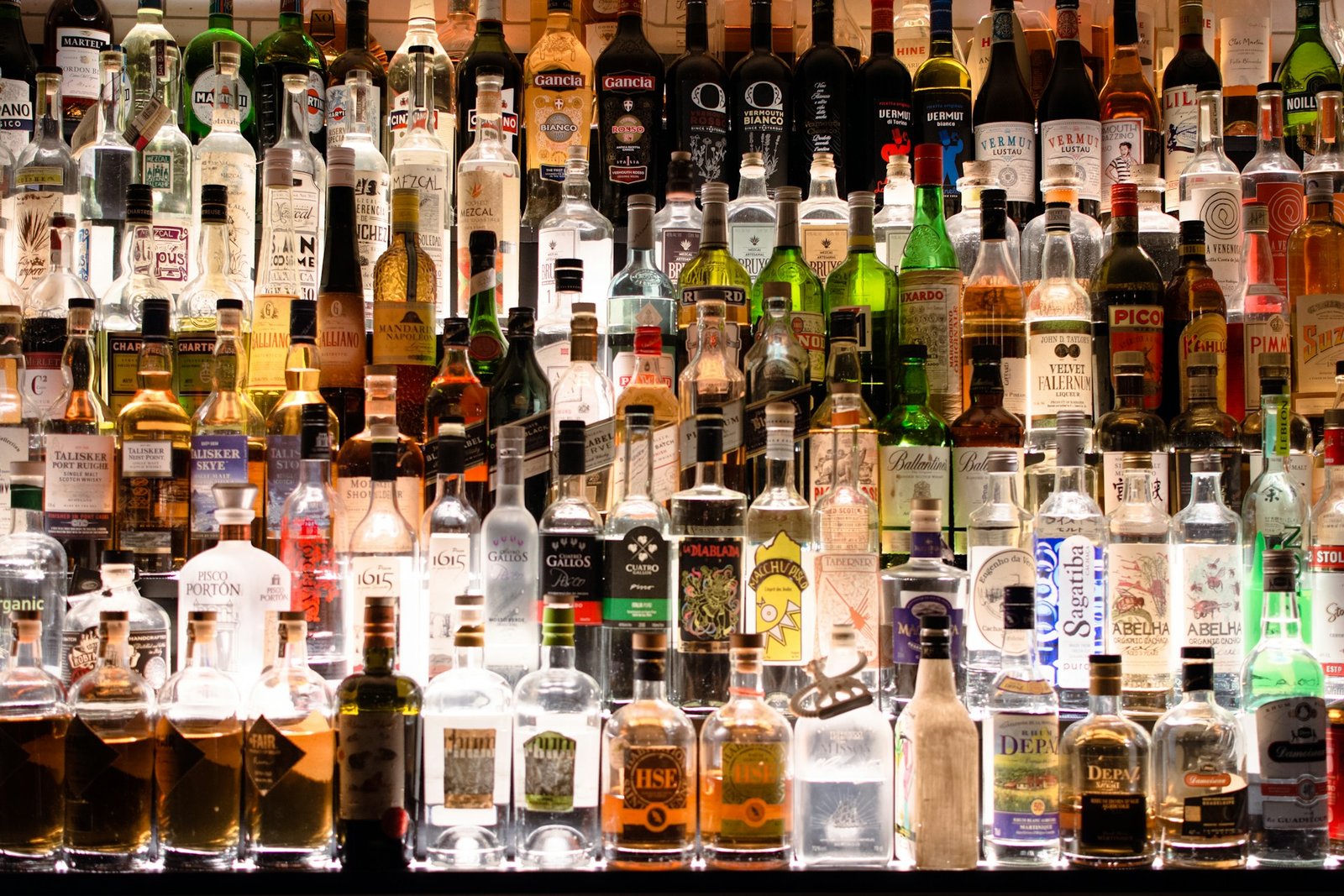
India’s food safety regulator Food Safety and Standards Authority of India’s (FSSAI) campaign against major liquor manufacturers over labeling and packaging violations has triggered court challenges from top spirits companies and a bottle seizure targeting Diageo, the financial media reported.
At the center of the dispute is FSSAI’s move to halt sales of well-known rum and whiskey brands—including Old Monk, McDowell’s No. 1, Royal Challenge, and VAT 69—over allegations of unauthorized flavoring, misleading labels, and non-compliant packaging materials.
According to reports, the affected companies say the crackdown threatens decades-old products and is causing significant financial losses, while FSSAI maintains its actions are necessary to protect consumers from misbranded and potentially unsafe products.
United Spirits and Mohan Meakin—owners of brands such as McDowell’s No. 1 and Old Monk—petitioned the Bombay High Court after FSSAI’s regulatory action effectively halted sales of their Indian-Made Foreign Liquor (IMFL) products.
The regulator’s objection centers on the use of artificial or nature-identical rum and whiskey flavorings in products sold under standard spirit names, which it argues can mask a drink’s natural composition and mislead consumers unless properly labeled as “flavored” products.
On 10 June, a bench comprising acting chief justice Ravindra Ghuge and Justice Gautam Ankhad declined to grant the companies immediate relief, opting instead to wait for the government’s formal response.
Additional Solicitor General Anil Singh, representing FSSAI, told the court an affidavit-in-reply would be filed before the matter is next heard. The center has been directed to respond by 19 August, with the case scheduled for further hearing on 24 August.
Senior advocate Navroz Seervai, representing Mohan Rocky Springwater Breweries (maker of Old Monk), told the court the company is losing nearly ₹1 crore a day and argued the rum has been sold under existing regulations for more than 50 years without any consumer complaints or illnesses. He characterized the FSSAI action as the product of personal agendas within the regulator rather than a genuine safety concern. Complying with the suggested relabeling, the company argued, would effectively be an admission that the product had been mis-marketed for five decades, financial media reports stated.
Senior advocate Birendra Saraf, appearing for United Spirits, made a similar case, arguing that consumers have long understood what they were buying and that the court needed to weigh the disruption to an operating business against FSSAI’s concerns. Both companies noted that changing product labels isn’t something they can do quickly, since any modification requires separate approval from state excise authorities.
FSSAI’s position, however, is that the case turns on statutory compliance rather than product safety or quality—a distinction the bench indicated would guide its review. Besides Old Monk and McDowell’s No. 1 Celebration Rum, the regulator’s flavoring-related bans have also touched Royal Challenge whiskey, Antiquity Blue whiskey, Bagpiper Deluxe whiskey, and Old Cask Deluxe Rum.
Separately, Indian inspectors seized roughly 18,000 boxes of Diageo liquor bottles after finding they lacked required markings certifying the use of safe recycled plastic. The seizure, first reported by Reuters, took place at a United Spirits factory (Diageo’s Indian unit) in Bengaluru, where officials found the plastic bottles carried only generic PET markings rather than the government-mandated recycled-PET symbol confirming food-grade safety.
A government memo described the missing markings as raising serious concerns about misbranding and the safety of the finished beverages, adding that the seizure served the public interest. Diageo India said the affected bottles have been quarantined pending further instructions, and stated that they came from an FSSAI-approved recycler and had undergone mandatory supplier testing. United Spirits maintained that its products remain safe for consumption and said it is working with FSSAI to resolve the matter.
The action, which focused on smaller 180ml plastic bottles rather than the glass bottles used for most large-format products, affected products worth an estimated $1.6 million across brands including DSP Black Deluxe whiskey, Smirnoff Zesty Lime Triple Distilled Flavored Vodka, and VAT 69 blended scotch whiskey.
The bottle seizure came just days after FSSAI barred two other Diageo whiskey brands over claims about their maturation process and use of artificial flavoring—part of what the regulator has also flagged as misleading marketing suggesting a top-selling whiskey was matured in American oak casks when most of it had not been. Diageo, which has called India its “consumer market of the decade,” posted $3 billion in Indian revenue for the year ending March 2026, making it one of the two dominant foreign spirits players in the country alongside Pernod Ricard.
More broadly, FSSAI’s flavoring crackdown has unsettled India’s $40 billion alcohol industry, sweeping in both multinational and domestic IMFL producers. The regulator has taken a similarly hard line with other sectors recently, including energy drink makers such as PepsiCo, as part of a wider compliance push across the food and beverage industry.
IndiFoodBev — authentic, impactful and influential
An English-language food and beverage processing and packaging industry B2B platform in print and web, IndiFoodBev is in its third year of publication. It is said that the Indian food and beverage industries represent approximately US$ 900 billion in revenues which implies more than 20% of the country’s GDP. Eliminating the wastage on the farmside can help to deliver more protein to a higher number of the population apart from generating sizable exports. The savings in soil, seeds, water, fertilizer, energy and ultimately food and nutrition could be the most immense contribution that country is poised to make to the moderation of climate change.
To improve your marketing and grow sales to the food and beverage processing and packaging industry, talk to us. Our research and consulting company IppStar [www.ippstar.org] can assess your potential and addressable markets in light of the competition. We can discuss marketing, communication, and sales strategies for market entry and growth.
Suppliers and service providers with a strategy and budget for targeted marketing can discuss using our hybrid print, web, video, and social media channels to create brand recognition linked to market relevance. Our technical writers are ready to meet you and your customers for content.
The second largest producer of fruit and vegetables in the world is continuously expanding processing capacities and delivery systems with appropriate innovative technologies. We cover product and consumer trends, nutrition, processing, research, equipment and packaging from farm to thali. Get our 2025 media kit and recalibrate your role in this dynamic market. Enhance your visibility and relevance to existing markets and turn potential customers into conversations. Ask for a sample copy of our bi-monthly in print or our weekly IndiFoodBev eZine each Wednesday.
For editorial info@ippgroup.in — for advertisement ads1@ippgroup.in and for subscriptions subscription@ippgroup.in
Naresh Khanna – 10 February 2025
Subscribe Now