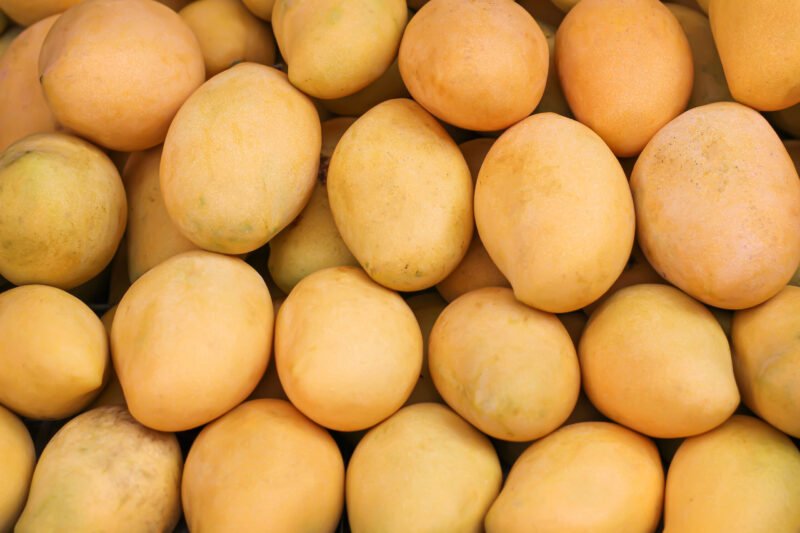
The sweet aroma and vibrant taste of Indian mangoes (Mangifera indica) have captivated global palates for centuries, earning the fruit its rightful title as the ‘King of Fruits.’ India stands as an agricultural titan in this domain, producing between 25 and 28 million metric tons (MMT) of mangoes annually. Bhushan Namdeorao Yengade looks at the recent reverses in exports and proposes several initiatives.

This immense output accounts for nearly 40% to 45% of global production, positioning India far ahead of any competitor. Premium varieties such as Alphonso, Kesar, Langra, and Banganapalli are internationally celebrated for their flavor, texture, and aroma, often commanding price premiums of 20% to 30% in high-end markets.
Despite this dominance, India’s presence in the global export market remains strikingly limited. The country contributes only about 0.3% to 1% of global mango exports, with over 99% of its production consumed domestically. This imbalance highlights a deep structural paradox – a nation that leads in production struggles to convert its agricultural abundance into export strength.
The 2026 Japanese suspension of Indian mango imports exposed this vulnerability. Triggered by compliance failures at a key processing facility, the ban underscored systemic issues in phytosanitary management, infrastructure, and regulatory execution. It also reinforced a recurring lesson – in global agricultural trade, consistency and compliance matter as much as production volume.
For India to transition into a true export powerhouse, it must address gaps in quality control, post-harvest logistics, climate resilience, and institutional coordination. Only a combination of technological modernization, farmer empowerment, and proactive diplomacy can bridge the gap between potential and performance.
The 2026 Japan ban – causes and immediate implications

The crisis began when Japan’s Ministry of Agriculture, Forestry and Fisheries (MAFF) suspended mango imports from India during the peak export season. The issue was traced to irregularities at the Rehmanpur Vapor Heat Treatment (VHT) facility, a critical component in Japan’s quarantine protocol.
VHT is a non-chemical disinfection process that uses controlled heat to eliminate pests such as the Oriental fruit fly (Bactrocera dorsalis) and melon fly (Bactrocera cucurbitae). The system requires strict adherence to temperature thresholds, timing, and monitoring procedures. Even minor deviations can compromise pest eradication and lead to immediate rejection.
Japan’s protocol mandates three layers of compliance – treatment at approved facilities, supervision by Japanese inspectors, and certified documentation from India’s National Plant Protection Organization. The breakdown at Rehmanpur violated this framework, prompting a swift suspension.
The consequences were immediate and severe. Exporters faced heavy losses as shipments intended for premium Japanese markets were redirected to domestic markets, causing price crashes. Farmers in key growing regions such as Maharashtra and Gujarat experienced financial distress, particularly those already affected by climate-induced crop losses.
Equally concerning was the reputational impact. Japan’s strict standards often serve as a benchmark for other developed markets. The ban raised concerns among regulators in the United States and the European Union, increasing scrutiny on Indian exports and threatening broader trade relationships.
Historical context – recurring phytosanitary obstacles
The 2026 ban is part of a broader historical pattern. Between 1986 and 2006, Japan imposed a two-decade ban on Indian mangoes due to fruit fly concerns. Trade resumed only after India invested in advanced VHT infrastructure and implemented strict monitoring protocols.
Similarly, the United States banned Indian mangoes in 1989, lifting the restriction in 2007 after India adopted gamma irradiation as an approved phytosanitary treatment. However, even after gaining access, errors continued to disrupt trade. For instance, documentation mistakes in 2025 led to costly shipment rejections.
These episodes demonstrate that market access is not a one-time achievement but an ongoing process requiring consistent compliance, technological upgrades, and diplomatic engagement.
Production dominance vs export marginalization
India’s mango economy is heavily skewed toward domestic consumption. Cultural preferences, strong seasonal demand, and established local markets absorb nearly the entire harvest.
At the same time, structural inefficiencies limit export growth –
- Post-harvest losses range from 25% to 30% due to poor handling and inadequate storage.
- Cold chain infrastructure covers only a small fraction of total production.
- Regulatory compliance remains inconsistent across regions and stakeholders.
As a result, exports are concentrated in a few markets such as the UAE, USA, and UK. This narrow focus increases vulnerability to regulatory disruptions, as seen in the Japan case.
Root challenges faced by Indian mango growers
The challenges begin at the farm level. Over 93% of mango growers are smallholders with limited resources. Fragmented landholdings prevent economies of scale, making it difficult to adopt modern technologies or access export markets directly.
Middlemen dominate the supply chain, often taking significant margins and limiting farmers’ earnings. Many growers lack access to real-time market information, forcing them to accept low prices.
Infrastructure deficiencies further compound the problem. Most mangoes are handled manually, transported without temperature control, and stored in suboptimal conditions. This leads to rapid spoilage and high rejection rates.
Climate change adds another layer of risk. Extreme weather events, such as the 2026 El Niño, have caused severe crop losses. Pest infestations and excessive pesticide use also create compliance issues, particularly with strict residue limits in international markets.
Government interventions and strategic recommendations
The Indian government, through APEDA, has introduced several initiatives to address these challenges. Subsidies for packhouses, cold storage, and VHT facilities aim to strengthen infrastructure. The MangoNet platform enhances traceability, while residue monitoring programs ensure compliance with international standards.
However, incremental improvements are not enough. A comprehensive transformation strategy is required.
First, phytosanitary compliance must be strengthened. This includes expanding certified VHT facilities, automating treatment processes, and introducing third-party audits. Exporters should receive mandatory training in international documentation and regulatory requirements.
Second, post-harvest infrastructure must be upgraded. Establishing decentralized pre-cooling units at farm clusters can significantly reduce losses. Expanding refrigerated transport networks and developing advanced packaging solutions will improve product quality and shelf life.
Third, market diversification is essential. India should pursue trade agreements with new markets such as South Korea and Canada while promoting value-added products like freeze-dried mango and organic pulp. These products face fewer regulatory barriers and offer higher margins.
Fourth, farmer empowerment is critical. Strengthening Farmer Producer Organizations (FPOs) can improve bargaining power, reduce dependence on intermediaries, and enable collective investment in infrastructure.
Food technology horizons – preserving quality safely
Future competitiveness will depend on integrating advanced food technologies with traditional practices. Controlled atmosphere storage, which adjusts oxygen and carbon dioxide levels, can extend shelf life and preserve flavor.
Natural edible coatings made from biodegradable materials can reduce moisture loss and protect against pathogens. Combined treatment approaches, such as mild heat with low-dose irradiation, offer effective pest control without compromising quality.
These innovations represent the next frontier in balancing quarantine compliance with consumer expectations.
Conclusion – a cultural treasure and strategic vision
The 2026 Japanese ban is not merely a disruption; it is a strategic inflection point. It reveals the urgent need for systemic reform and coordinated action across the mango value chain.
A bold step forward would be the establishment of a National Mango Board. This institution could centralize efforts in quality standardization, global marketing, infrastructure financing, and trade diplomacy. By aligning stakeholders under a unified strategy, India can transform its mango sector into a globally competitive industry.
This push would revive an agricultural legacy dating back millennia, when the mango was more than a trade commodity. It symbolized spiritual, economic, and diplomatic significance. Celebrated in Jataka tales as a metaphor for wisdom and fertility, and depicted in Sanchi Stupa carvings, its cultural value was profound. This reverence is exemplified by the courtesan Amrapali, who donated her prosperous Amrvan – mango grove to the Buddha, highlighting the fruit’s deep ties to spirituality, patronage, and prestige.
In the short term, India must resolve compliance issues and restore market confidence. In the medium term, it must build robust infrastructure and institutional capacity. In the long term, it must expand its global market share and establish itself as a leader in both fresh and processed mango products.
References
- Yokohama Plant Protection Association (Japan)
- APEDA (Agricultural and Processed Food Products Export Development Authority, India)
- Ministry of Agriculture and Farmers Welfare (India)
- USDA (United States Department of Agriculture)
- FAO (Food and Agriculture Organization of the United Nations)
- ICAR (Indian Council of Agricultural Research)
- WTO (World Trade Organization)
- Omura, K., Tanno, M., Adachi, H., & Dohino, T. (2017). Factors affecting on mortality of Bactrocera dorsalis (Diptera: Tephritidae) eggs in different mango varieties subjected to vapor heat treatment. Research Bulletin of the Plant Protection Station, Japan, (53), 9–14.
IndiFoodBev — authentic, impactful and influential
An English-language food and beverage processing and packaging industry B2B platform in print and web, IndiFoodBev is in its third year of publication. It is said that the Indian food and beverage industries represent approximately US$ 900 billion in revenues which implies more than 20% of the country’s GDP. Eliminating the wastage on the farmside can help to deliver more protein to a higher number of the population apart from generating sizable exports. The savings in soil, seeds, water, fertilizer, energy and ultimately food and nutrition could be the most immense contribution that country is poised to make to the moderation of climate change.
To improve your marketing and grow sales to the food and beverage processing and packaging industry, talk to us. Our research and consulting company IppStar [www.ippstar.org] can assess your potential and addressable markets in light of the competition. We can discuss marketing, communication, and sales strategies for market entry and growth.
Suppliers and service providers with a strategy and budget for targeted marketing can discuss using our hybrid print, web, video, and social media channels to create brand recognition linked to market relevance. Our technical writers are ready to meet you and your customers for content.
The second largest producer of fruit and vegetables in the world is continuously expanding processing capacities and delivery systems with appropriate innovative technologies. We cover product and consumer trends, nutrition, processing, research, equipment and packaging from farm to thali. Get our 2025 media kit and recalibrate your role in this dynamic market. Enhance your visibility and relevance to existing markets and turn potential customers into conversations. Ask for a sample copy of our bi-monthly in print or our weekly IndiFoodBev eZine each Wednesday.
For editorial info@ippgroup.in — for advertisement ads1@ippgroup.in and for subscriptions subscription@ippgroup.in
Naresh Khanna – 10 February 2025
Subscribe Now