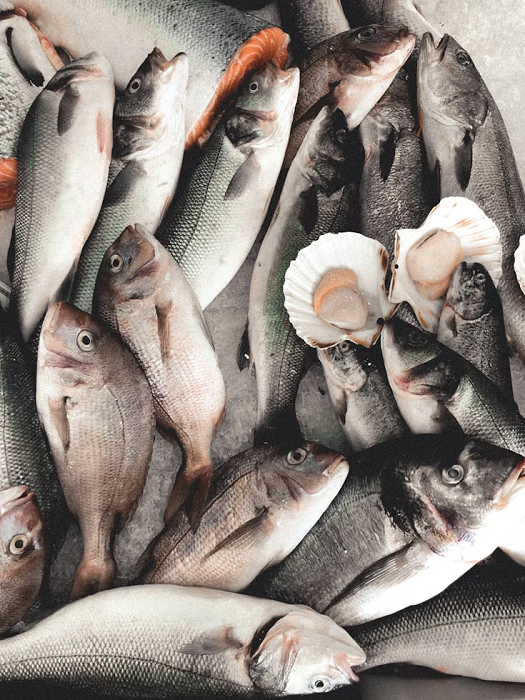
India’s seafood exports have recorded significant growth over the past five years, rising by about 42.7% in value and nearly 47.8% in quantity, according to information presented in the Lok Sabha by Union Fisheries, Animal Husbandry and Dairy Minister Rajiv Ranjan Singh.
The total value of seafood exports increased from ₹43,720.98 crore in 2020–21 to ₹62,408.45 crore in 2024–25. During the same period, export volumes rose from 11.49 lakh metric tonnes to 16.98 lakh metric tonnes, reflecting strong growth in the sector.
Exports to the United States, one of India’s largest markets, also expanded. The value of seafood exports to the US grew from ₹17,990.40 crore in 2020–21 to ₹22,722.69 crore in 2024–25, while the quantity increased from 2.91 lakh metric tons to 3.46 lakh metric tons.
Tamil Nadu continues to play an important role in India’s seafood industry, particularly through shrimp farming and exports that support coastal livelihoods and employment. In 2024–25, the state exported 1,07,659 metric tonnes of marine products worth ₹5,744.56 crore. Provisional figures for 2025–26 (April to January) show further growth, with exports reaching 1,25,332 metric tonnes valued at ₹6,323.79 crore. This growth highlights the resilience of Tamil Nadu’s seafood sector despite fluctuations in global markets.
The government acknowledged challenges faced by the shrimp export industry, including fluctuations in global demand, price volatility, rising input costs, and tariff and non-tariff barriers imposed by importing countries. However, shrimp exports during April–January 2025–26 have increased in both quantity and value compared to the same period in 2024–25, indicating continued positive momentum.
To sustain growth in seafood exports, the Department of Fisheries has undertaken several initiatives and consultations with stakeholders. These include investors’ meets in the Andaman and Nicobar Islands and Lakshadweep, coastal states fisheries meetings, inland fisheries and aquaculture meetings, seafood exporters’ interactions, and World Fisheries Day celebrations under the theme “India’s Blue Transformation: Strengthening Value Addition in Seafood Exports.” A round-table conference with ambassadors and high commissioners from 39 countries was also held to promote trade cooperation and sustainable fisheries development.
The government is also working to improve ease of doing business by amending regulations, streamlining imports, and reducing import duties on key aquaculture inputs and fish processing ingredients. In the latest Union Budget, the duty-free import limit for certain seafood processing inputs has been increased from 1 per cent to 3 per cent of the previous year’s FOB export value to boost value-added exports.
Sustainability measures are also being promoted, including the installation of Turtle Excluder Devices in trawl nets, strengthened antibiotic residue monitoring, and the launch of a comprehensive traceability framework. The Sustainable Harnessing of Fisheries in the Exclusive Economic Zone (EEZ) Rules, 2025, have also been notified to promote high-value, export-oriented fisheries in the Andaman and Nicobar and Lakshadweep Islands.
Flagship schemes such as the Pradhan Mantri Matsya Sampada Yojana (PMMSY) and the Fisheries and Aquaculture Infrastructure Development Fund (FIDF) are supporting the expansion of aquaculture, modern processing infrastructure, disease management, and technology adoption in the fisheries sector.
The Marine Products Export Development Authority (MPEDA) continues to promote Indian seafood globally through brand promotion, exporter support, training programs, international trade fairs, and buyer-seller meets, while the Export Inspection Council ensures compliance with international quality standards through regular awareness and training initiatives across the seafood value chain.
IndiFoodBev — authentic, impactful and influential
An English-language food and beverage processing and packaging industry B2B platform in print and web, IndiFoodBev is in its third year of publication. It is said that the Indian food and beverage industries represent approximately US$ 900 billion in revenues which implies more than 20% of the country’s GDP. Eliminating the wastage on the farmside can help to deliver more protein to a higher number of the population apart from generating sizable exports. The savings in soil, seeds, water, fertilizer, energy and ultimately food and nutrition could be the most immense contribution that country is poised to make to the moderation of climate change.
To improve your marketing and grow sales to the food and beverage processing and packaging industry, talk to us. Our research and consulting company IppStar [www.ippstar.org] can assess your potential and addressable markets in light of the competition. We can discuss marketing, communication, and sales strategies for market entry and growth.
Suppliers and service providers with a strategy and budget for targeted marketing can discuss using our hybrid print, web, video, and social media channels to create brand recognition linked to market relevance. Our technical writers are ready to meet you and your customers for content.
The second largest producer of fruit and vegetables in the world is continuously expanding processing capacities and delivery systems with appropriate innovative technologies. We cover product and consumer trends, nutrition, processing, research, equipment and packaging from farm to thali. Get our 2025 media kit and recalibrate your role in this dynamic market. Enhance your visibility and relevance to existing markets and turn potential customers into conversations. Ask for a sample copy of our bi-monthly in print or our weekly IndiFoodBev eZine each Wednesday.
For editorial info@ippgroup.in — for advertisement ads1@ippgroup.in and for subscriptions subscription@ippgroup.in
Naresh Khanna – 10 February 2025
Subscribe Now