Seeds are the foundation of agriculture and the starting point of food security.
Across Africa and India, millions of farmers still plant varieties developed decades ago, unsuited to today’s climate and nutritional realities.
This is driven by low seed replacement rates and slow varietal turnover, forcing many farmers to recycle seed from previous harvests, gradually reducing yield potential and resilience.
Over time, these seeds lose vigor and purity, and farmers remain locked into older genetics that cannot withstand emerging pests, diseases, and climate stresses.
Productivity declines quietly but consistently, and vulnerability deepens.
Yet at the same time, agricultural science has advanced rapidly.
Today’s improved seeds embody decades of research in genomics, breeding, and climate adaptation.
In the drylands of India, new-generation pearl millet hybrids developed through ICRISAT partnerships are delivering yield gains of up to 28 percent under drought conditions while improving disease resistance and fodder value.
Across Africa, biofortified pearl millet varieties released in countries such as Ethiopia, alongside hybrid innovations in Nigeria, are improving both productivity and nutrition by increasing iron and zinc content in staple crops.
The issue is not that better seeds don’t exist. The issue is that they do not reach farmers fast enough, and closing this gap requires strong, science-driven seed systems that can deliver at scale.
This is where ICRISAT’s work stands out. Its strength lies not only in developing improved varieties, but in ensuring they reach farmers through integrated, evidence-based delivery approaches.
This systems focus is reflected in the work of ICRISAT scientists and others across the CGIAR system, whose research and partnerships across Africa and Asia have helped close the gap between innovation and adoption.
Such contributions, including those of researchers like Dr Manzoor Dar, have enabled millions of farmers to access stress-tolerant crops and have been recognized globally, including through the 2025 Top Agri-Food Pioneer award from the World Food Prize Foundation.
This collective, systems-driven approach is already delivering results on the ground.
A compelling example comes from Malawi, where farmers have partnered with ICRISAT for over four decades to transform food systems and livelihoods.
Under the leadership of ICRISAT scientists Dr Sam Njoroge and Dr James Mwololo, this transformation is driven by the Seed Revolving Fund, a model that ensures improved seed flows continuously through the system rather than moving only once.
The strength of this model lies in long-term partnership.
Farmers are trained as seed producers and linked directly to research and breeding programs.
They are supported through contractual arrangements that provide stability in a sector often defined by volatility.
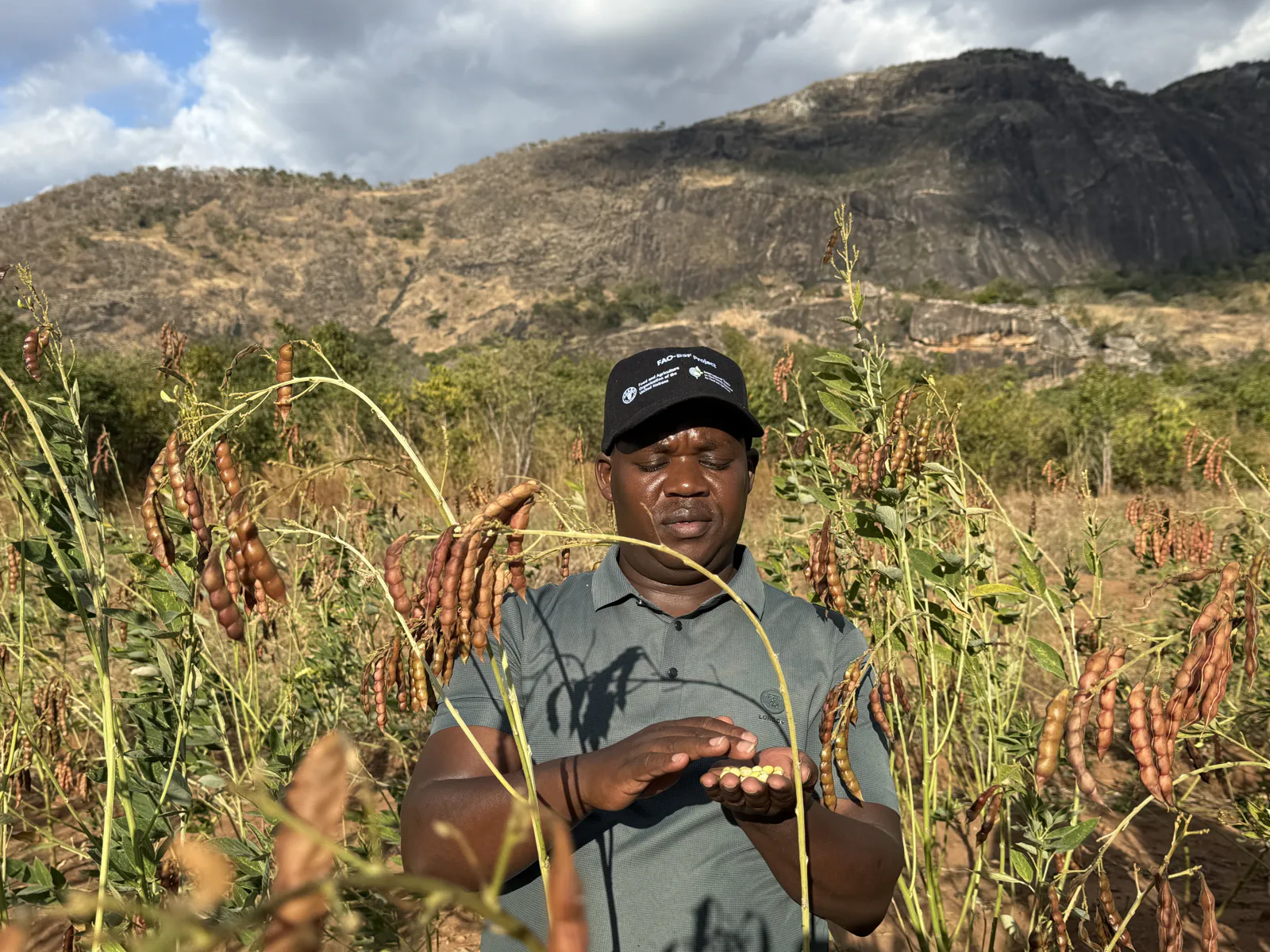
One Malawian producer, Mansoor Dar Bedha, who has worked within this system for more than two decades, has produced over 2,500 tons of certified seed, with annual production averaging around 100 tons.
His experience reflects the value of predictability in agriculture, where contracts replace exposure to fluctuating prices and uncertain markets.
This predictability has helped build trust between farmers and institutions over decades, creating a system that endures and evolves rather than one dependent on short-term interventions.
At the core of this system is the Seed Revolving Fund, which operates as a continuous cycle. Breeder- and pre-basic-seed developed through research is provided to trained farmers, who multiply it under strict quality standards under breeder supervision.
The seed is then aggregated, bought back, and sold through broader market channels, particularly through seed companies.
The revenue generated is reinvested into the system, allowing it to expand with each season.
Over time, this approach has delivered more than 1,200 tons of foundation seed in Malawi and reached over 150,000 farmers. It has contributed significantly to the revitalization of key crops, such as groundnut and pigeonpea, thereby strengthening incomes and food security.
This model also demonstrates a critical principle. No single actor can deliver impact alone.
Research institutions generate early-generation seed, but scaling requires the involvement of seed companies, distributors, and market actors who can produce and deliver certified seed at scale.
The system succeeds because it connects science, farmers, and markets into a single functioning ecosystem.
Farmers in Malawi clearly articulate the importance of this.
The quality of the seed planted determines the quality of the harvest. Planting clean, high-quality seed each season maximizes productivity, particularly in countries with limited land and high population pressure. Under such conditions, extracting the highest possible yield from each hectare is essential.
Yet in many regions, the absence of reliable systems forces farmers to rely on recycled seed, reinforcing a cycle of low productivity and vulnerability.
Seed replacement rates remain low. Varietal turnover is slow. Access to certified seed is inconsistent. Delivery systems are weak, particularly in remote and dryland regions. Coordination across the value chain remains fragmented.
These challenges are becoming more urgent as climate change accelerates. The pace of environmental change is outpacing the rate at which improved varieties are developed and adopted. The gap between scientific innovation and farmer reality continues to widen.
Closing this gap requires sustained investment in people, institutions, and systems.
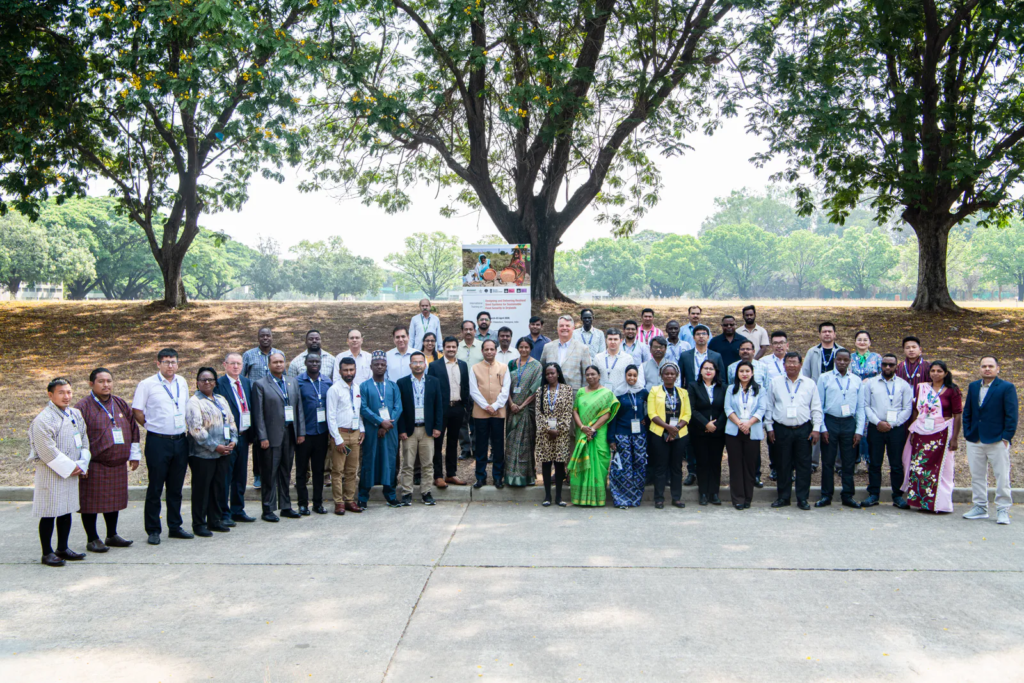
Through its role as a global knowledge partner, ICRISAT is strengthening capacity across regions by delivering frontier training through the ICRISAT Center of Excellence for South–South Cooperation in Agriculture, supported by the ICRISAT Dryland Academy under the Indian Technical and Economic Cooperation Program of the Ministry of External Affairs. These programs bring together practitioners from Africa, Asia, and beyond to build practical, scalable solutions.
Currently, more than 37 participants from 15 countries are at ICRISAT headquarters in India, undertaking advanced training in Designing and Delivering Sustainable Seed Systems.
The program is grounded in real-world application, equipping participants to build systems that work in practice while promoting shared learning across countries facing similar challenges and strengthening South–South cooperation grounded in experience rather than theory alone.
Participants are exposed to the full spectrum of seed systems, from genebanks and breeding pipelines to seed value chains, market linkages, and policy frameworks.
The emphasis is on integrated learning that connects science with systems, markets, and policy, ensuring that solutions are developed in alignment with how agriculture actually functions on the ground.
The experience from Malawi demonstrates that the seed gap can be closed when these elements come together. It requires a shift from developing improved varieties to ensuring they are continuously produced, distributed, and adopted at scale.
Increasing seed replacement rates and accelerating varietal turnover must become central priorities. Farmer-led seed enterprises must be strengthened. Long-term partnerships built on trust and shared value must replace fragmented approaches.
India’s large and complex seed ecosystem demonstrates that scale is achievable, while also highlighting the ongoing need to strengthen speed, inclusivity, and quality.
Across Africa, there is a parallel opportunity to build adaptive, resilient seed systems from the outset, drawing on both local contexts and global experience to expand farmer access.
The world is entering a period in which the pace of climate change is outpacing that of agricultural adaptation, compounded by geopolitical shifts reshaping trade, straining supply chains, and heightening risks to global food security.
Closing the seed gap is one of the most immediate and self-reliant responses available.
The future of agriculture will be determined by the seeds farmers can plant, season after season. Strengthening seed delivery systems is therefore one of the highest-impact investments we can make, and ICRISAT stands ready to share its experience and partner with others to help make this a reality at scale.
IndiFoodBev — authentic, impactful and influential
An English-language food and beverage processing and packaging industry B2B platform in print and web, IndiFoodBev is in its third year of publication. It is said that the Indian food and beverage industries represent approximately US$ 900 billion in revenues which implies more than 20% of the country’s GDP. Eliminating the wastage on the farmside can help to deliver more protein to a higher number of the population apart from generating sizable exports. The savings in soil, seeds, water, fertilizer, energy and ultimately food and nutrition could be the most immense contribution that country is poised to make to the moderation of climate change.
To improve your marketing and grow sales to the food and beverage processing and packaging industry, talk to us. Our research and consulting company IppStar [www.ippstar.org] can assess your potential and addressable markets in light of the competition. We can discuss marketing, communication, and sales strategies for market entry and growth.
Suppliers and service providers with a strategy and budget for targeted marketing can discuss using our hybrid print, web, video, and social media channels to create brand recognition linked to market relevance. Our technical writers are ready to meet you and your customers for content.
The second largest producer of fruit and vegetables in the world is continuously expanding processing capacities and delivery systems with appropriate innovative technologies. We cover product and consumer trends, nutrition, processing, research, equipment and packaging from farm to thali. Get our 2025 media kit and recalibrate your role in this dynamic market. Enhance your visibility and relevance to existing markets and turn potential customers into conversations. Ask for a sample copy of our bi-monthly in print or our weekly IndiFoodBev eZine each Wednesday.
For editorial info@ippgroup.in — for advertisement ads1@ippgroup.in and for subscriptions subscription@ippgroup.in
Naresh Khanna – 10 February 2025
Subscribe Now