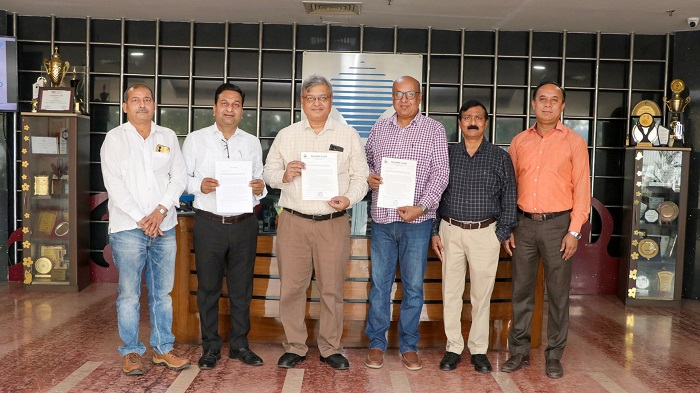
Spray Engineering Devices Limited (SED), a global leader in energy-efficient industrial technologies, continues to drive the technological evolution of India’s agro-industry with the announcement of a new industrial-scale project in Bihar.
The company has secured a turnkey engineering, procurement, and construction (EPC) contract from Harsidhi Agro Food and Biofuels to establish a 475 TCD (tons crushed per day) fully automated, MVR-based jaggery plant in East Champaran.
This project introduces industrial-scale automation and mechanical vapor tecompression (MVR) technology to traditional processing, setting a new standard for energy efficiency and production quality in the region.
The plant will oversee the entire lifecycle of jaggery production, from design and manufacturing to final commissioning. By recycling waste heat through MVR technology—a first at this scale for the sector—the facility will significantly cut energy costs and improve process performance. The project is expected to be completed within six to seven months, featuring modern utilities and automation that will reduce the carbon footprint by 90%. The total project value stands at approximately Rs75 crore.
Vivek Verma, managing director, SED stated “For too long, jaggery production in India has been sidelined as a traditional, low-tech sector. We are changing that narrative by bringing global engineering standards to the grassroots. By deploying MVR technology, we aren’t just building a plant; we are creating a blueprint for an energy-efficient sugarcane ecosystem. This facility will prove that traditional agro products can be manufactured with the same precision and efficiency as high-end industrial goods, ultimately helping farmers realize better value for their produce.”
Krishnarjun Kushwaha, managing director, Harsidhi Agro Food and Biofuels, added, “Choosing SED as our EPC partner was a strategic move to ensure our facility stands at the forefront of the agro-processing industry. Their expertise in automation and process engineering is exactly what Bihar’s sugarcane sector needs to scale up. We expect this plant to generate over 1000 direct and indirect jobs in the East Champaran region, while setting a new benchmark for hygiene and production speed in the domestic market.”
The project scope covers everything from the initial cane carrier to final jaggery storage, including electrical and automation infrastructure. As India moves toward smart villages and sustainable manufacturing, this initiative marks a pivotal shift in how the country processes its sugarcane surplus. Once operational, the plant is expected to deliver 90% energy savings, reduces up to 50,000 tonnes of CO₂ emissions annually, and create 1000 direct and indirect jobs, underscoring its impact on sustainability and rural development.
Established in 1992, Spray Engineering Devices is one of the fastest-growing technology-driven companies, providing integrated energy-saving equipment and solutions for water, biofuel, jaggery, and sugar industries across more than 40 countries.
Specializing in thermal waste heat recovery, evaporation, crystallization, heat exchange, and condensation systems, SED holds over 100 global IP protections and operates three hi-tech manufacturing units in Baddi, Himachal Pradesh.
IndiFoodBev — authentic, impactful and influential
An English-language food and beverage processing and packaging industry B2B platform in print and web, IndiFoodBev is in its third year of publication. It is said that the Indian food and beverage industries represent approximately US$ 900 billion in revenues which implies more than 20% of the country’s GDP. Eliminating the wastage on the farmside can help to deliver more protein to a higher number of the population apart from generating sizable exports. The savings in soil, seeds, water, fertilizer, energy and ultimately food and nutrition could be the most immense contribution that country is poised to make to the moderation of climate change.
To improve your marketing and grow sales to the food and beverage processing and packaging industry, talk to us. Our research and consulting company IppStar [www.ippstar.org] can assess your potential and addressable markets in light of the competition. We can discuss marketing, communication, and sales strategies for market entry and growth.
Suppliers and service providers with a strategy and budget for targeted marketing can discuss using our hybrid print, web, video, and social media channels to create brand recognition linked to market relevance. Our technical writers are ready to meet you and your customers for content.
The second largest producer of fruit and vegetables in the world is continuously expanding processing capacities and delivery systems with appropriate innovative technologies. We cover product and consumer trends, nutrition, processing, research, equipment and packaging from farm to thali. Get our 2025 media kit and recalibrate your role in this dynamic market. Enhance your visibility and relevance to existing markets and turn potential customers into conversations. Ask for a sample copy of our bi-monthly in print or our weekly IndiFoodBev eZine each Wednesday.
For editorial info@ippgroup.in — for advertisement ads1@ippgroup.in and for subscriptions subscription@ippgroup.in
Naresh Khanna – 10 February 2025
Subscribe Now