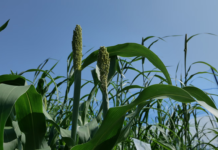
India’s southwest monsoon ended with a 12.6% rainfall deficit, raising concerns over agricultural output, crop sowing, irrigation water availability and the outlook for foodgrain production. The shortfall has affected several major crop-growing regions, delayed kharif sowing and increased pressure on water resources ahead of the rabi season.

The southwest monsoon ended on 30 September with all-India rainfall at 87% of the long-period average (LPA), marking the worst performance since 2015 and the fourth-lowest rainfall since 2001. Cumulative rainfall stood at about 759.4 mm against the normal of 868.6 mm, a deficit of about 12.6%, IMD said.
The season began poorly, with June rainfall at just 65% of normal. July received 101%, followed by 84% in August and 92% in September. Late-season rainfall reduced the overall deficit from approximately 15%, but the improvement came too late to benefit some standing crops.
The India Meteorological Department (IMD) attributed the shortfall to El Niño conditions, which it expected to peak in November. October rainfall was also forecast to remain below normal, potentially adding to concerns over agricultural water availability.
Regional and state-level variations
The rainfall deficit varied considerably across regions. East and Northeast India recorded a shortfall of 26%, followed by southern India at 24%. Northwest India was 6% below normal, while Central India recorded a comparatively smaller deficit of 3%.
East and Northeast India received 1,016.3 mm of rainfall, the lowest for the region since 1901. According to IMD data reported by Down To Earth, 313 of the country’s 741 districts had deficient or largely deficient rainfall, meaning they received at least 20% less than normal.
Bihar was among the worst-affected states, with 31 of its 38 districts recording below-normal rainfall. The state reportedly experienced its fifth consecutive monsoon drought, increasing the risks facing farmers and rural communities.
Impact on agriculture
The sharp rainfall deficit in June delayed agricultural operations and initially reduced kharif sowing. By 10 July, the area sown was 16% lower than a year earlier, with pulses down approximately 23% and coarse cereals down around 22%.
Sowing subsequently recovered, but the gap had not closed completely. By 18 September, farmers had planted 110.39 million hectares under kharif crops, around 1.5 million hectares less than the previous year. Rice acreage declined by 3.7% to 42.9 million hectares, the financial media reported. (These are only estimated numbers and could change)
Paddy recorded the largest reduction, with its planted area falling by approximately 16.32 lakh hectares. Declines were reported in Maharashtra, Tamil Nadu, Telangana, Andhra Pradesh, Rajasthan and Gujarat. Maize, soybean and cotton acreage also decreased.
In contrast, the area under urad, bajra, jowar, sesame, sunflower, moong and tur increased. This shift partly reflected official efforts to encourage farmers to grow less water-intensive crops in response to uncertain rainfall and water availability.
Reservoirs and the rabi season
The availability of irrigation water is emerging as a major concern ahead of the rabi season, according to experts. As of 24 September, major reservoirs held approximately 70% of their total capacity, compared with a 10-year average of 76.62% and 79% during the corresponding period in 2025.
Southern India faced particularly acute pressure, with reservoir storage at around 50% of capacity, compared with 87.25% a year earlier. In Karnataka, live storage stood at 62.32% of capacity against 82.73% in 2025, raising concerns about the prospects for rabi sowing. (A good northeast monsoon, could, however change these numbers for the southern states.)
Lower reservoir levels could constrain irrigation for winter crops, particularly in regions dependent on stored water. Reports have also highlighted growing reliance on groundwater for irrigation in drought-affected areas, adding to concerns over the sustainability of agricultural water supplies.
Foodgrain production outlook
The government maintained a cautious but relatively optimistic assessment of foodgrain production. On 29 September, the Centre set a foodgrain production target of 373.93 million tons for 2026-27, 2.63 million tons below the 376.56 million tons produced in 2025-26.
The target comprises 196.21 million tons of kharif foodgrains and 177.72 million tons of rabi production.
Agriculture minister Shivraj Singh Chouhan said there was unlikely to be a significant decline in kharif foodgrain production. He noted that a rainfall deficit of up to 19% is not classified as a severe drought and that the overall area sown had declined by only around 1%. However, he acknowledged that five states were experiencing drought conditions.
The lower annual target reflects the uncertainty surrounding agricultural production amid deficient rainfall and the possible effects of El Niño. The eventual outcome will depend on crop performance, the availability of irrigation water and weather conditions during the rabi season.
India’s monsoon shortfall comes amid growing international concerns over food security. On 28 September, external affairs minister S Jaishankar warned of a potential global food crisis in the coming months while speaking at the Asia Society in New York.
Jaishankar said disruptions to global supply chains could create a wider “4F crisis” involving food, fuel, fertiliser and finance, particularly affecting economies in the Global South.
He highlighted difficulties faced by major exporters in shipping cargoes, particularly through maritime routes in the Black Sea region. He also pointed to disruptions affecting fertiliser supplies, noting that key producers are located in conflict-affected regions, including West Asia and Russia.
For India, the combination of below-normal monsoon rainfall, pressure on irrigation resources and uncertainty over global food and fertilizer supplies underscores the importance of monitoring crop output and water availability.
While the government has not projected a sharp decline in foodgrain production, the performance of the rabi season will be critical in determining the overall impact of the deficient monsoon on agricultural output and food security.
IndiFoodBev — authentic, impactful and influential
An English-language food and beverage processing and packaging industry B2B platform in print and web, IndiFoodBev is in its third year of publication. It is said that the Indian food and beverage industries represent approximately US$ 900 billion in revenues which implies more than 20% of the country’s GDP. Eliminating the wastage on the farmside can help to deliver more protein to a higher number of the population apart from generating sizable exports. The savings in soil, seeds, water, fertilizer, energy and ultimately food and nutrition could be the most immense contribution that country is poised to make to the moderation of climate change.
To improve your marketing and grow sales to the food and beverage processing and packaging industry, talk to us. Our research and consulting company IppStar [www.ippstar.org] can assess your potential and addressable markets in light of the competition. We can discuss marketing, communication, and sales strategies for market entry and growth.
Suppliers and service providers with a strategy and budget for targeted marketing can discuss using our hybrid print, web, video, and social media channels to create brand recognition linked to market relevance. Our technical writers are ready to meet you and your customers for content.
The second largest producer of fruit and vegetables in the world is continuously expanding processing capacities and delivery systems with appropriate innovative technologies. We cover product and consumer trends, nutrition, processing, research, equipment and packaging from farm to thali. Get our 2025 media kit and recalibrate your role in this dynamic market. Enhance your visibility and relevance to existing markets and turn potential customers into conversations. Ask for a sample copy of our bi-monthly in print or our weekly IndiFoodBev eZine each Wednesday.
For editorial info@ippgroup.in — for advertisement ads1@ippgroup.in and for subscriptions subscription@ippgroup.in
Naresh Khanna – 10 February 2025
Subscribe Now