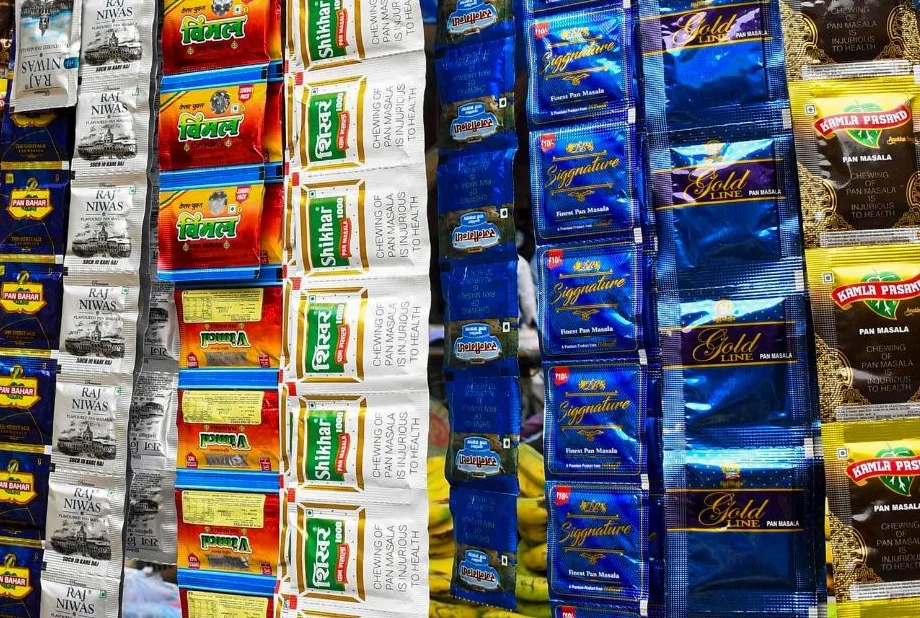
In a bid to reduce the use of plastic and encourage sustainable materials, the Food Safety and Standards Authority of India (FSSAI) has notified a ban on plastic packaging for pan masala, finalizing the rule after considering public feedback on its draft proposal from earlier this year.
Manufacturers have been directed to shift to plastic-free alternatives such as paper, paperboard, cellulose and other naturally derived materials, along with tin or glass containers.
The Food Safety and Standards (Packaging) Amendment Regulations, 2026 – effective immediately – were notified on 7 August, 2026, and published in the Gazette of India on 10 August, 2026.
As reported by Packaging South Asia on 30 May, the ban follows a draft notification issued on 28 April, 2026, under Section 92(1) of the Food Safety and Standards Act, 2006. A 60-day window was allowed for public objections and suggestions.
The notification states that FSSAI reviewed the feedback received and finalized the amendment under the powers granted by Section 92(2)(k) of the Act, with prior approval from the central government.
The final notification issued by Rajit Punhani, chief executive officer of FSSAI, inserts a new Serial Number 11 for pan masala into Schedule IV of the Food Safety and Standards (Packaging) Regulations, 2018, which lists suggested packaging materials.
It permits paper, paperboard, cellulose, or other naturally derived materials but bans plastic, including but not limited to polyethylene, polypropylene, polyester, PVC, or any synthetic polymers, copolymers, or laminates, as well as aluminum foil or metalized layers
Tin or glass containers – listed separately as permitted packaging options under the new entry – are allowed for pan masala packaging.
The amendment also states that certain provisions of the Plastic Waste Management Rules, 2016, framed under the Environment (Protection) Act, 1986, will apply to pan masala packaging. The notification, a packaging regulation, does not ban pan masala as a product.
With the amendment now in force, manufacturers no longer have a compliance runway — the shift away from plastic sachets to paper/cellulose-based or tin and glass packaging is now a live legal requirement, not an anticipated one.
Companies still using non-compliant plastic packaging are now exposed to enforcement action under both food safety law and the Plastic Waste Management Rules, 2016.
This move is likely to affect the industry, which depends heavily on multilayer sachets that are hard to recycle and contribute to littering and pollution.
IndiFoodBev — authentic, impactful and influential
An English-language food and beverage processing and packaging industry B2B platform in print and web, IndiFoodBev is in its third year of publication. It is said that the Indian food and beverage industries represent approximately US$ 900 billion in revenues which implies more than 20% of the country’s GDP. Eliminating the wastage on the farmside can help to deliver more protein to a higher number of the population apart from generating sizable exports. The savings in soil, seeds, water, fertilizer, energy and ultimately food and nutrition could be the most immense contribution that country is poised to make to the moderation of climate change.
To improve your marketing and grow sales to the food and beverage processing and packaging industry, talk to us. Our research and consulting company IppStar [www.ippstar.org] can assess your potential and addressable markets in light of the competition. We can discuss marketing, communication, and sales strategies for market entry and growth.
Suppliers and service providers with a strategy and budget for targeted marketing can discuss using our hybrid print, web, video, and social media channels to create brand recognition linked to market relevance. Our technical writers are ready to meet you and your customers for content.
The second largest producer of fruit and vegetables in the world is continuously expanding processing capacities and delivery systems with appropriate innovative technologies. We cover product and consumer trends, nutrition, processing, research, equipment and packaging from farm to thali. Get our 2025 media kit and recalibrate your role in this dynamic market. Enhance your visibility and relevance to existing markets and turn potential customers into conversations. Ask for a sample copy of our bi-monthly in print or our weekly IndiFoodBev eZine each Wednesday.
For editorial info@ippgroup.in — for advertisement ads1@ippgroup.in and for subscriptions subscription@ippgroup.in
Naresh Khanna – 10 February 2025
Subscribe Now