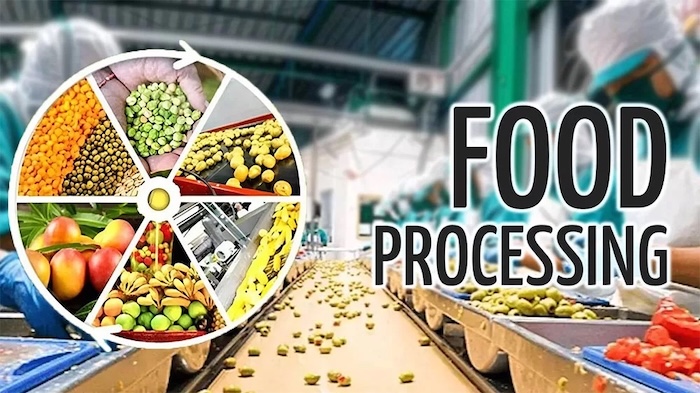
The ministry of food processing industries (MoFPI) launched a slew of initiatives in 2025 to accelerate the growth of India’s food processing sector, enhance farmer incomes, and create large-scale employment opportunities. Through sustained efforts, the ministry continued to strengthen preservation and processing infrastructure, reduce post-harvest losses, and promote innovation, investment, and global competitiveness in the sector.
The food processing industry continues to play a pivotal role in the country’s agricultural and manufacturing landscape. Over the past decade, the sector’s contribution to India’s economy has grown steadily. The share of processed food exports in total agri-food exports has risen significantly from 13.7 percent in 2014-15 to 20.4% in 2024-25.
It has also emerged as one of the largest employment providers in the organized manufacturing sector, accounting for 12.83 percent of total employment, according to the Annual Survey of Industries (ASI) 2023–24. The Gross Value Added (GVA) of the food processing sector has increased from ₹1.34 lakh crore in 2014-15 to ₹2.24 lakh crore in 2023–24, while the sector has attracted US$ 7.33 billion in FDI equity inflows between April 2014 and March 2025.
Reflecting the government’s continued commitment to strengthening this vital industry, the Union Government has allocated a Budget Estimate (BE) of ₹4,064 crore to the ministry for 2026-27. This represents a 13.79 percent increase over the Revised Estimate (RE) of ₹3,571.57 crore for 2025-26.
Central schemes
Among the ministry’s flagship initiatives, the Pradhan Mantri Kisan Sampada Yojana (PMKSY) has played a central role in creating food processing infrastructure across the country. With an approved outlay of ₹6,520 crore for the 15th Finance Commission cycle, the scheme continued to expand its reach in 2025. Since January 2025, 36 new projects have been approved and 94 completed, adding a processing and preservation capacity of 28.48 lakh metric tons. These projects are expected to benefit around 1.4 lakh farmers and generate more than 9,000 direct and indirect employment opportunities. In total, since the inception of PMKSY, 1,618 projects have been sanctioned, of which 1,185 are operational, collectively creating a capacity of 270.51 lakh metric tons. The scheme has leveraged investments of ₹21,917 crore, benefiting 51 lakh farmers and generating more than 7.22 lakh jobs.
In 2025, the Union Cabinet approved additional support under PMKSY for setting up 50 multi-product food irradiation units and 100 NABL-accredited food testing laboratories, aimed at improving food safety and quality infrastructure. Evaluations by NABCONS revealed that PMKSY has made a measurable impact, with cold chain projects reducing post-harvest waste by up to 70 percent in fisheries and 85 percent in dairy products.
Another major initiative, the Pradhan Mantri Formalisation of Micro Food Processing Enterprises (PMFME) Scheme, continued to empower grassroots entrepreneurs under the Atmanirbhar Bharat Abhiyan. This ₹10,000-crore scheme seeks to formalize micro food processing enterprises through credit-linked subsidies and the One District One Product approach. Since January 2025, 56,543 loans have been sanctioned under the scheme, while ₹240.92 crore has been disbursed as seed capital assistance to over 63,000 members of Self-Help Groups. The Ministry also approved one new incubation centre and commissioned eight others during the year, providing crucial product development support to micro enterprises. Since the scheme’s inception, a total of 1,72,707 loans have been sanctioned, ₹1,282.98 crore has been released as seed capital, and 76 incubation centres have been approved, with 23 already operational. Twenty-seven marketing and branding proposals, including two national-level projects with NAFED, have also been approved to help micro-enterprises expand their market reach.
The Production Linked Incentive Scheme for Food Processing Industries (PLISFPI) continued to drive India’s emergence as a global food manufacturing hub. Approved with an outlay of ₹10,900 crore, the scheme is designed to encourage investment in four key segments—ready-to-cook/ready-to-eat foods, processed fruits and vegetables, marine products, and mozzarella cheese—while also supporting innovative, organic, and millet-based products. As of 2025, a total of 170 proposals have been approved under the scheme, attracting investments worth ₹9,702 crore and generating 3.4 lakh employment opportunities. Incentives totaling ₹2,162.55 crore have been disbursed across 161 eligible cases, underscoring the scheme’s success in building global food brands from India.
World Food India
A major highlight of the year was the successful organization of World Food India 2025, held from September 25 to 28 at Bharat Mandapam, New Delhi. The event served as a global platform to showcase India’s strength in the food processing sector, facilitating partnerships among producers, processors, investors, and technology providers. Inaugurated by Prime Minister Narendra Modi, in the presence of deputy prime minister of Russia Dmitry Patrushev and Union minister of food processing industries Shri Chirag Paswan, the event drew unprecedented participation. Over 1,725 exhibitors, 115 countries, and 95,000 visitors took part in the four-day event. Saudi Arabia and New Zealand were the Partner Countries, while Japan, Russia, the UAE, and Vietnam participated as Focus Countries.
World Food India 2025 resulted in the signing of investment commitments worth more than ₹1,02,000 crore—one of the largest ever for India’s food processing sector. The event also hosted the Global Food Regulators Summit organized by FSSAI and a Reverse Buyer-Seller Meet with 640 international buyers from 74 countries. The Ministry’s PMFME Pavilion showcased 250 ODOP products integrated with QR codes linked to the PMFME Marketplace, a digital ODOP map of 726 districts, and 110 success stories of entrepreneurs. During the event, the Prime Minister released ₹778 crore in credit-linked subsidies to 26,000 PMFME beneficiaries and interacted directly with several micro-entrepreneurs.
Through these wide-ranging initiatives—spanning infrastructure development, entrepreneurship promotion, investment facilitation, and international engagement—the Ministry of Food Processing Industries has significantly advanced India’s vision of becoming a global food processing powerhouse. The Ministry’s focus on innovation, inclusivity, and sustainability continues to empower farmers, strengthen rural livelihoods, and bolster India’s presence in global agri-food trade.
(This information has been processed from a PIB release)
IndiFoodBev — authentic, impactful and influential
An English-language food and beverage processing and packaging industry B2B platform in print and web, IndiFoodBev is in its third year of publication. It is said that the Indian food and beverage industries represent approximately US$ 900 billion in revenues which implies more than 20% of the country’s GDP. Eliminating the wastage on the farmside can help to deliver more protein to a higher number of the population apart from generating sizable exports. The savings in soil, seeds, water, fertilizer, energy and ultimately food and nutrition could be the most immense contribution that country is poised to make to the moderation of climate change.
To improve your marketing and grow sales to the food and beverage processing and packaging industry, talk to us. Our research and consulting company IppStar [www.ippstar.org] can assess your potential and addressable markets in light of the competition. We can discuss marketing, communication, and sales strategies for market entry and growth.
Suppliers and service providers with a strategy and budget for targeted marketing can discuss using our hybrid print, web, video, and social media channels to create brand recognition linked to market relevance. Our technical writers are ready to meet you and your customers for content.
The second largest producer of fruit and vegetables in the world is continuously expanding processing capacities and delivery systems with appropriate innovative technologies. We cover product and consumer trends, nutrition, processing, research, equipment and packaging from farm to thali. Get our 2025 media kit and recalibrate your role in this dynamic market. Enhance your visibility and relevance to existing markets and turn potential customers into conversations. Ask for a sample copy of our bi-monthly in print or our weekly IndiFoodBev eZine each Wednesday.
For editorial info@ippgroup.in — for advertisement ads1@ippgroup.in and for subscriptions subscription@ippgroup.in
Naresh Khanna – 10 February 2025
Subscribe Now