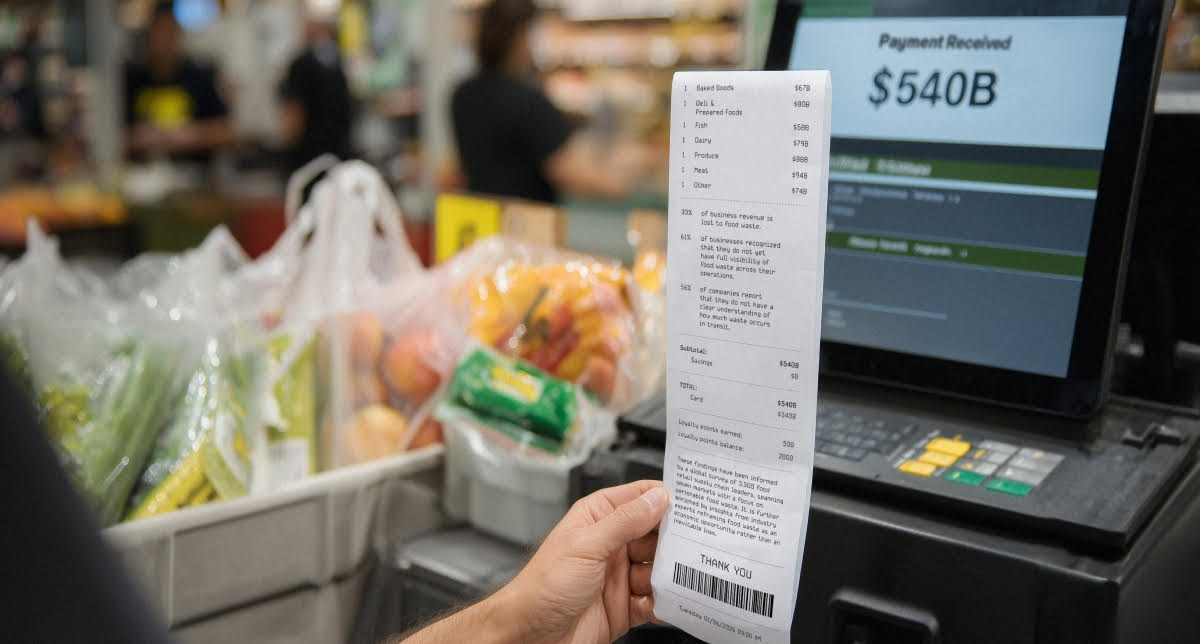
New research commissioned by Avery Dennison (NYSE: AVY), a global leader in materials science and digital identification solutions, reveals a visibility gap in India’s food supply chain: 70% of the 500 food and supply chain leaders surveyed reported they lose sight of products once they are in the transport system, exacerbating the risk of food waste.

Despite growing complexity and cost pressures, 80% still rely on spreadsheets to manage inventory which may limit operational visibility compared to end-to-end tracking systems.
The new report developed by Avery Dennison working with the Centre for Economics and Business Research (Cebr), reveals a US$ 540 billion annual opportunity, according to the Cebr analysis, to reduce food waste across the global supply chain. Packaging South Asia has written about the report.
Based on one of the most extensive studies of its kind involving 3,500 global leaders across seven countries, the report demonstrates that tackling food waste can be a powerful driver of profitability, resilience and long-term growth.
The scale of the challenge in India
At the country level, three-quarters of Indian businesses (75%) report food waste costs have increased over the past three years, while 86% say investment in technology to reduce food waste could unlock significant savings over the next 10 years.
Category pain points
When asked which food categories present the biggest waste reduction challenges, Indian leaders identified produce (fresh fruit and vegetables) and dairy, alongside baked goods and meat as the most problematic, highlighting widespread visibility gaps across perishable categories.
The reliance on spreadsheet-based inventory management is compounding these challenges, creating visibility challenges that can make it difficult for businesses to understand product provenance and condition across increasingly complex supply chains.
Technology promises efficiency
Despite the scale of the problem, there are encouraging signs. A quarter of Indian businesses (25%) have already invested in shelf-life extension technologies, reporting waste reductions of 28-31% on average. Another 28% plan to implement similar solutions in the near term.
Regulatory compliance is emerging as a powerful catalyst, with 80% of leaders identifying legislation as a major driver for waste reduction strategies. Meanwhile, 81% recognize climate change as the biggest threat exacerbating food waste, as extreme weather events disrupt supply chains and make demand forecasting increasingly difficult.
Julie Vargas, VP/GM, enterprise intelligent labels growth, Avery Dennison, says, “Indian food retailers are navigating manual processes, supply chain complexity and climate volatility. With the right technology partners, they can turn these challenges into measurable value and shift the conversation on food waste, unlocking sales growth and efficiency across the entire supply chain.”
IndiFoodBev — authentic, impactful and influential
An English-language food and beverage processing and packaging industry B2B platform in print and web, IndiFoodBev is in its third year of publication. It is said that the Indian food and beverage industries represent approximately US$ 900 billion in revenues which implies more than 20% of the country’s GDP. Eliminating the wastage on the farmside can help to deliver more protein to a higher number of the population apart from generating sizable exports. The savings in soil, seeds, water, fertilizer, energy and ultimately food and nutrition could be the most immense contribution that country is poised to make to the moderation of climate change.
To improve your marketing and grow sales to the food and beverage processing and packaging industry, talk to us. Our research and consulting company IppStar [www.ippstar.org] can assess your potential and addressable markets in light of the competition. We can discuss marketing, communication, and sales strategies for market entry and growth.
Suppliers and service providers with a strategy and budget for targeted marketing can discuss using our hybrid print, web, video, and social media channels to create brand recognition linked to market relevance. Our technical writers are ready to meet you and your customers for content.
The second largest producer of fruit and vegetables in the world is continuously expanding processing capacities and delivery systems with appropriate innovative technologies. We cover product and consumer trends, nutrition, processing, research, equipment and packaging from farm to thali. Get our 2025 media kit and recalibrate your role in this dynamic market. Enhance your visibility and relevance to existing markets and turn potential customers into conversations. Ask for a sample copy of our bi-monthly in print or our weekly IndiFoodBev eZine each Wednesday.
For editorial info@ippgroup.in — for advertisement ads1@ippgroup.in and for subscriptions subscription@ippgroup.in
Naresh Khanna – 10 February 2025
Subscribe Now