International concern over the presence of endocrine disruptors (EDs), especially Bisphenol A (BPA) and its derivatives, has reached unprecedented levels. These persistent substances, capable of altering the hormonal and reproductive systems of humans and animals, are undergoing intensive scientific and regulatory review.
In Europe, the European Food Safety Authority (EFSA) has recommended reducing the tolerable daily intake of BPA by 100,000 times, while US authorities (FDA) are also studying new limits. At the same time, regulations such as Directive (EU) 2020/2184, the recent Royal Decree 3/2023 in Spain, and ongoing work by ECHA point clearly towards tighter restrictions affecting food, beverages, drinking water and all types of industrial and consumer products.
In this context, sectors highly dependent on bisphenol-based resins and additives — such as epoxy coatings — are facing an unprecedented transformation. The SAFE-ED Coatings project, coordinated by Fakolith with the participation of AIMPLAS, the Plastics Technology Centre, was launched to provide a technical, health and regulatory response to this new scenario.
Its objective is to develop up to four innovative coating systems capable of reducing endocrine disruptor migration to undetectable levels (<1 ppb) or eliminating it entirely, while maintaining the functionality required for use in construction and civil engineering surfaces, food industry installations (indirect contact), direct contact with drinking water, and direct contact with food and beverages.
Marta García, R&D&I director at Fakolith, stated that “the speed at which legislation is evolving means that many existing solutions are becoming obsolete. The coatings sector needs safe and functional alternatives, and SAFE-ED Coatings will make it possible to anticipate these changes with viable technologies for industry and properly certified market-ready solutions.”
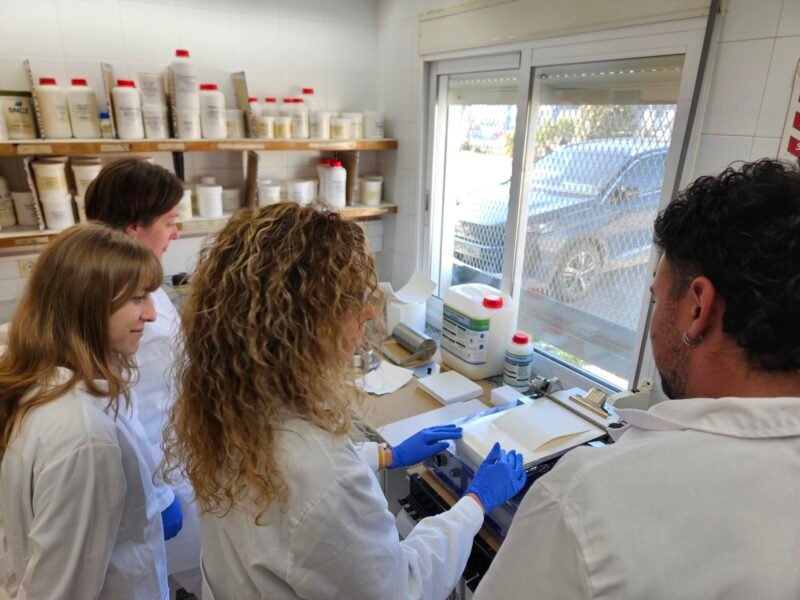
Meanwhile, Ma Carmen Moreno, researcher at the Food Contact and Packaging Laboratory at AIMPLAS, explained that “we are adapting and expanding our testing methodologies for coatings in order to meet the new regulatory limits.”
Fakolith, a specialist in coatings for surfaces in direct and indirect contact with food, beverages and drinking water, is leading the development and formulation of the new systems, focusing on the principles of elimination, reduction and encapsulation of endocrine disruptors. The project began with a pool of no fewer than 80 raw materials, of which at least 60 (75%) are expected to meet the requirements for direct food contact while also being functional for the new coating systems.
Advanced methodologies
AIMPLAS is contributing its expertise in legislation and risk assessment. The technology centre has evaluated the regulatory documentation of the raw materials, defined the necessary tests in accordance with current regulations and upcoming updates, and is applying advanced methodologies to adapt standards applicable to coatings and achieve increasingly stringent regulatory limits (<1 ppb).
Faced with one of the most significant regulatory changes in recent years in the field of food safety, SAFE-ED Coatings is positioned as a strategic project that will enable industry to move towards high-performance, sustainable and safe coatings, ensuring compliance with both current and future regulations.
SAFE-ED Coatings will have a direct impact on sectors particularly exposed to the new restrictions, such as the food industry, construction, civil engineering, healthcare and drinking water facilities. The project will strengthen safety in surfaces that come into direct and indirect contact with food, beverages and drinking water through the drastic reduction and elimination of endocrine disruptor migration. In addition, it will promote the incorporation of more sustainable alternatives based on bio-based materials, ensure the operational continuity of industrial applications affected by the recent prohibition and restriction of bisphenols, and facilitate knowledge transfer to manufacturers, applicators and the entire specialised coatings value chain.
The project will conclude at the end of 2026 and is funded by the European Union – NextGenerationEU through the Recovery, Transformation and Resilience Plan, with the support of the State Research Agency (AEI) of the Spanish Ministry of Science, Innovation and Universities.
IndiFoodBev — authentic, impactful and influential
An English-language food and beverage processing and packaging industry B2B platform in print and web, IndiFoodBev is in its third year of publication. It is said that the Indian food and beverage industries represent approximately US$ 900 billion in revenues which implies more than 20% of the country’s GDP. Eliminating the wastage on the farmside can help to deliver more protein to a higher number of the population apart from generating sizable exports. The savings in soil, seeds, water, fertilizer, energy and ultimately food and nutrition could be the most immense contribution that country is poised to make to the moderation of climate change.
To improve your marketing and grow sales to the food and beverage processing and packaging industry, talk to us. Our research and consulting company IppStar [www.ippstar.org] can assess your potential and addressable markets in light of the competition. We can discuss marketing, communication, and sales strategies for market entry and growth.
Suppliers and service providers with a strategy and budget for targeted marketing can discuss using our hybrid print, web, video, and social media channels to create brand recognition linked to market relevance. Our technical writers are ready to meet you and your customers for content.
The second largest producer of fruit and vegetables in the world is continuously expanding processing capacities and delivery systems with appropriate innovative technologies. We cover product and consumer trends, nutrition, processing, research, equipment and packaging from farm to thali. Get our 2025 media kit and recalibrate your role in this dynamic market. Enhance your visibility and relevance to existing markets and turn potential customers into conversations. Ask for a sample copy of our bi-monthly in print or our weekly IndiFoodBev eZine each Wednesday.
For editorial info@ippgroup.in — for advertisement ads1@ippgroup.in and for subscriptions subscription@ippgroup.in
Naresh Khanna – 10 February 2025
Subscribe Now