The Food Safety and Standards Authority of India (FSSAI) has stepped up the heat against several liquor manufacturers after lab tests revealed some rum and whiskey brands were being artificially flavored to imitate a taste they hadn’t actually earned through proper production, following widespread media coverage of the enforcement drive.
Reuters reported that FSSAI has banned sales of several popular whiskey and rum brands made by Diageo’s Indian unit and by Inbrew Beverages, after finding they used artificial flavorings rather than proper ageing and natural ingredients to create their taste.
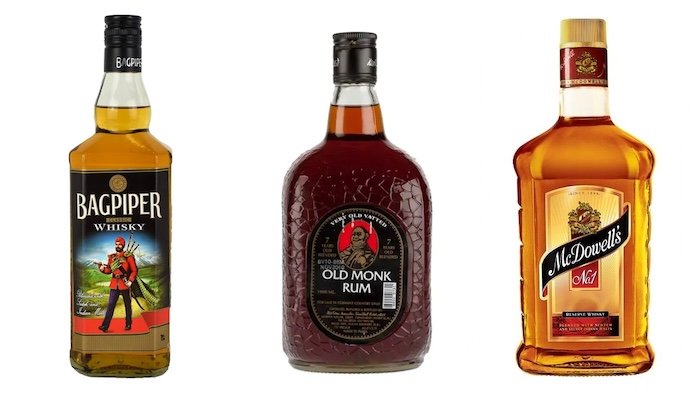
Banned products include Diageo’s Antiquity Blue whiskey, Royal Challenge whiskey, and McDowell’s No 1 Rum, along with Inbrew’s Bagpiper Deluxe whiskey and Old Cask Deluxe XXX Rum, and three variants of Old Monk rum made by Mohan Rocky Springwater.
Reuters said Diageo’s Indian arm, United Spirits, says its labeling complies with current law and has gone to court to challenge the order; it may also contest the whiskey rulings separately. Inbrew and Mohan Rocky did not respond to requests for comment.
The move follows the FSSAI’s recent crackdown on energy drink labeling among companies such as Pepsi and Red Bull.
The core problem: fake authenticity
In a detailed statement, FSSAI explained that normally, a spirit’s distinct taste comes from its raw material — molasses for rum, malt for whiskey — combined with fermentation, yeast action, distillation and ageing.
Investigators found that some producers were skipping this process altogether, using plain neutral alcohol with no inherent character, then spraying in external flavoring to mimic the real thing. The finished product was then sold under standard category names as if it were the genuine article, misleading buyers who had no way of knowing the difference from the label.
Regulators say such products should honestly be labeled as “rum-flavored spirit” or “whiskey-flavored spirit,” but packaging gave no such indication. This goes against the 2020 Food Safety and Standards (Labelling and Display) Regulations, which require every food package to clearly state the true nature of its contents on the front.
What the lab tests found
Samples of rum and whiskey from multiple companies were tested, and labs flagged them as sub-standard due to artificial or nature-identical flavors detected in the liquid. Regulations require rum, for instance, to carry the taste and aroma naturally associated with the category — not a chemically recreated approximation. One lab report noted that added flavoring was effectively covering up the absence of a genuine one, and warned that failing to disclose this as “flavored” or “premix” liquor could deceive consumers.
The probe also caught a labeling violation involving an Old Monk XXX Rum variant marketed as “7 years old blended.” Investigators found that the aged component made up less than 5% of the blend, with the bulk being unmatured neutral spirit. Under the 2018 Alcoholic Beverages Regulations, any age claim must reflect the youngest spirit used in the mix — meaning the “7-year-old” label didn’t hold up.
Where FSSAI draws the line on flavoring
FSSAI was careful to clarify that flavoring itself isn’t the issue — additives like coffee or vanilla remain legal when there’s a genuine technical reason for using them. The violation, officials said, lies specifically in adding a spirit’s own flavor to itself — rum flavor added to rum, whiskey flavor added to whiskey — which serves no real purpose since that taste is supposed to emerge naturally from the product itself. Authorities compared it to artificially flavoring coffee to taste like coffee. This principle is grounded in Clauses 3.1.1(4) and 3.1.1(7) of the 2011 Food Products Standards and Food Additives Regulations.
Companies affected
Based on failed lab results, FSSAI ordered a sales prohibition on products from:
- Mohan Rocky Springwater’s Khopoli unit (Old Monk Rum — The Legend, Gold Reserve, and XXX Matured variants)
- United Spirits’ Baramati unit (McDowell’s No. 1 Rum)
- INBREW Beverages in Madhya Pradesh (Bagpiper Deluxe whiskey, Old Cask Deluxe XXX Rum)
- Associated Alcohol & Breweries in Madhya Pradesh (Central Province whiskey, McDowell’s No. 1 Celebration Matured XXX Rum)
- United Spirits’ Madhya Pradesh unit (Antiquity Blue whiskey, Royal Challenge whiskey)
In Goa, regulators inspected and sampled products at Mandexi Distilleries & Breweries. Six additional manufacturers in Maharashtra have received notices, with further action expected.
Two manufacturers appealed their sales ban and were granted conditional relief: they can sell off existing stock, but only if the true nature of the product is disclosed on the front of the pack. Going forward, they’ve been directed not to add identical flavors — such as rum or whiskey flavor — to their own products.
Industry-wide, not universal
FSSAI stressed that this isn’t an industry-wide problem — many manufacturers continue to produce compliant, standard beverages. The issue is confined to a subset of producers relying heavily on neutral or extra-neutral alcohol who then add artificial or identical flavors to fake the sensory profile consumers expect. The authority also noted that no internationally recognized production method involves adding a spirit’s own flavor to itself to create its defining character.
FSSAI reiterated that its standards exist to keep alcoholic beverages authentic to their raw material origins and to prevent additives that could mislead consumers, reaffirming its mandate to protect consumer interests and ensure fair trade practices across the food sector.
IndiFoodBev — authentic, impactful and influential
An English-language food and beverage processing and packaging industry B2B platform in print and web, IndiFoodBev is in its third year of publication. It is said that the Indian food and beverage industries represent approximately US$ 900 billion in revenues which implies more than 20% of the country’s GDP. Eliminating the wastage on the farmside can help to deliver more protein to a higher number of the population apart from generating sizable exports. The savings in soil, seeds, water, fertilizer, energy and ultimately food and nutrition could be the most immense contribution that country is poised to make to the moderation of climate change.
To improve your marketing and grow sales to the food and beverage processing and packaging industry, talk to us. Our research and consulting company IppStar [www.ippstar.org] can assess your potential and addressable markets in light of the competition. We can discuss marketing, communication, and sales strategies for market entry and growth.
Suppliers and service providers with a strategy and budget for targeted marketing can discuss using our hybrid print, web, video, and social media channels to create brand recognition linked to market relevance. Our technical writers are ready to meet you and your customers for content.
The second largest producer of fruit and vegetables in the world is continuously expanding processing capacities and delivery systems with appropriate innovative technologies. We cover product and consumer trends, nutrition, processing, research, equipment and packaging from farm to thali. Get our 2025 media kit and recalibrate your role in this dynamic market. Enhance your visibility and relevance to existing markets and turn potential customers into conversations. Ask for a sample copy of our bi-monthly in print or our weekly IndiFoodBev eZine each Wednesday.
For editorial info@ippgroup.in — for advertisement ads1@ippgroup.in and for subscriptions subscription@ippgroup.in
Naresh Khanna – 10 February 2025
Subscribe Now