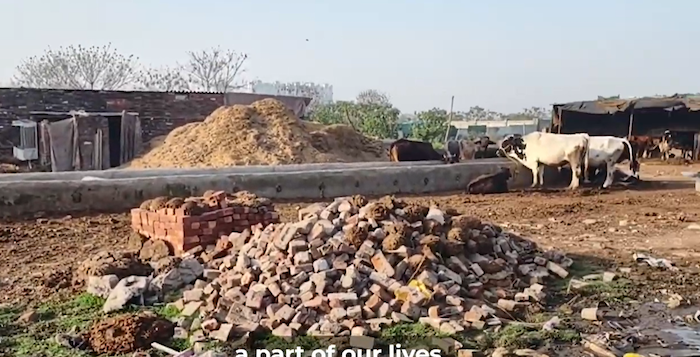
Nonprofit animal advocacy organization Sentient World has released the findings of a first-of-its-kind multi-state investigation into dairy operations across India, documenting widespread animal welfare, public health, and environmental concerns across more than 100 dairy units in Chandigarh, Punjab, Uttarakhand, Bihar, West Bengal, and Chhattisgarh.

Conducted between 10 February and 15 April 2026, the investigation examined a diverse range of dairy operations, from household-level farms to medium-scale facilities and large unregulated dairy clusters.
The investigation claims poor animal welfare and unhygienic dairy practices were not isolated incidents but recurring patterns across locations. Many dairy units were operating in residential neighborhoods or near public spaces, often within 10 to 300 meters of homes and water bodies, raising concerns about public health, environmental contamination and regulatory compliance.
Investigators documented overcrowding across a majority of facilities, with animals routinely subjected to prolonged tethering, including double and triple tethering and, in many cases, restraint through the nose or mouth. Dairy units housed anywhere between 10 and 500 animals, with an average of approximately 50 animals per unit.
The report records widespread evidence of compromised animal welfare, including malnutrition, untreated wounds, swollen joints, skin infections and behavioral signs of distress. Calves were frequently found tethered for extended periods, often without adequate shelter, while investigators documented multiple instances of Khal baccha practices used to stimulate milk let-down. Indications of oxytocin use, including visible bottles, syringes and admissions by some dairy operators, were also recorded during the investigation.
Investigators further observed that milking was commonly carried out in highly unhygienic conditions, often adjacent to open drains, sewage and accumulated waste. Milk was frequently stored in open containers, while manure and slurry were routinely discharged into open drains. In several locations, improper carcass disposal and dairy waste management practices pointed to broader environmental and public health risks.
The investigation also highlighted systemic challenges facing the sector. Across multiple states, dairy owners reported inadequate access to veterinary care, vaccination programmes, insurance and government support. These findings, coupled with inconsistent enforcement of existing regulations, suggest significant gaps in oversight and accountability.
The findings
More than 100 dairy units were examined across six states between 10 February and 15 April 2026. These operations varied in size from 10 to 500 animals, with an average of about 50 animals per unit.
Overcrowding and extended tethering were frequently observed, including cases of double and triple tethering. Two instances of Khal baccha practices were identified, and approximately 90% of units reported using oxytocin.
In urban settings, 70–80% of dairy units were located near residential areas, while around 5–10% were situated close to water bodies.
In rural regions, 40–60% of units operated near residential zones—similar to urban patterns—and about 20% were located near village water bodies.
Consistent operational trends were noted, with similar animal husbandry, milking, and waste management practices across locations, suggesting standardized systems rather than isolated cases.
Regulatory oversight appeared limited, with little indication of routine inspections or timely corrective measures, pointing to gaps in enforcement.
Support systems for farmers were inadequate, with restricted access to veterinary services, training, and institutional assistance contributing to poor welfare and management practices.
Accountability remained low, as insufficient monitoring enables continued non-compliance with animal welfare standards with minimal repercussions.
The repetition of similar findings across multiple states highlights that these issues are widespread rather than region-specific.
Stronger and more consistent implementation of existing regulations, along with improved monitoring and accountability, is necessary to achieve meaningful progress in animal welfare.
“This investigation demonstrates that poor animal welfare and unhygienic dairy practices are not isolated incidents but systemic issues observed across multiple states where we conducted our investigations. The findings highlight the urgent need for stronger implementation of existing laws, better oversight and greater accountability to safeguard animal welfare, public health and environmental standards,” said Abhishek Pandey, CEO, Sentient World.
Following the investigation, Sentient World calls for stronger implementation of existing animal welfare, environmental and public health regulations governing dairy operations. The organization also urges regular inspections of dairy units, improved veterinary support for farmers, and greater accountability to address practices that compromise animal welfare and hygiene.
Sentient World claims to be an organization working to document and expose animal welfare concerns through evidence-based investigations, research and public awareness initiatives.
IndiFoodBev — authentic, impactful and influential
An English-language food and beverage processing and packaging industry B2B platform in print and web, IndiFoodBev is in its third year of publication. It is said that the Indian food and beverage industries represent approximately US$ 900 billion in revenues which implies more than 20% of the country’s GDP. Eliminating the wastage on the farmside can help to deliver more protein to a higher number of the population apart from generating sizable exports. The savings in soil, seeds, water, fertilizer, energy and ultimately food and nutrition could be the most immense contribution that country is poised to make to the moderation of climate change.
To improve your marketing and grow sales to the food and beverage processing and packaging industry, talk to us. Our research and consulting company IppStar [www.ippstar.org] can assess your potential and addressable markets in light of the competition. We can discuss marketing, communication, and sales strategies for market entry and growth.
Suppliers and service providers with a strategy and budget for targeted marketing can discuss using our hybrid print, web, video, and social media channels to create brand recognition linked to market relevance. Our technical writers are ready to meet you and your customers for content.
The second largest producer of fruit and vegetables in the world is continuously expanding processing capacities and delivery systems with appropriate innovative technologies. We cover product and consumer trends, nutrition, processing, research, equipment and packaging from farm to thali. Get our 2025 media kit and recalibrate your role in this dynamic market. Enhance your visibility and relevance to existing markets and turn potential customers into conversations. Ask for a sample copy of our bi-monthly in print or our weekly IndiFoodBev eZine each Wednesday.
For editorial info@ippgroup.in — for advertisement ads1@ippgroup.in and for subscriptions subscription@ippgroup.in
Naresh Khanna – 10 February 2025
Subscribe Now