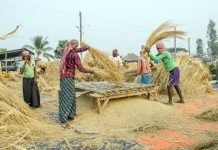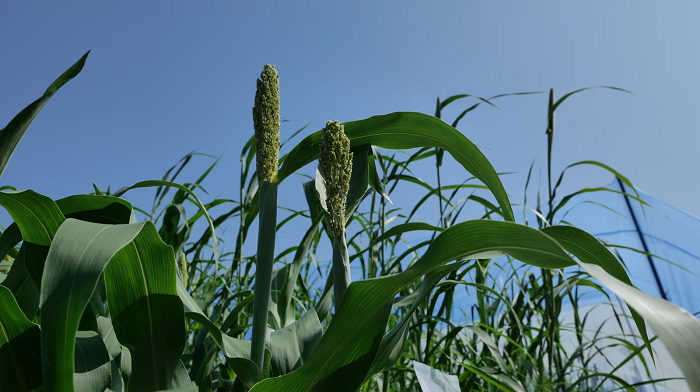
Google DeepMind, and Google.org via the AI Collaborative for Food Security, are collaborating with the Hyderabad-headquartered International Crops Research Institute for the Semi-Arid Tropics (ICRISAT), the HudsonAlpha Institute for Biotechnology, and Department of Genome Sciences, University of Washington, Seattle to help accelerate the development of globally essential, multi-purpose, climate-resilient crops like sorghum, known locally as jowar.

Belonging to the millet or Shree Anna family, such crops are increasingly critical to help farmers adapt and build resilience, especially in vulnerable dryland areas.
This collaboration will build an open-access Global Public Good, a genetic atlas that will include indigenous collections of sorghum varieties to support a range of use cases – as nutritious cereal in people’s diets, to animal fodder, biofuel and more.
Drawing on a representative sample from ICRISAT’s genebank of over 44,000 genetic samples from over 90 countries, including India, this initiative pairs advanced genetic analysis with machine learning to identify the most promising plant combinations. The resulting AI-supported genetic catalog is aimed at helping breeders and researchers across the world to develop more resilient and productive sorghum varieties faster than traditional methods, which can involve decade-long trial-and-error processes.
“At ICRISAT, we are committed to advancing crop productivity, resilience, and sustainability in the drylands, especially as the world grows increasingly vulnerable to the effects of climate change. We are excited to partner with Google and bring AI’s potential to the mission of transforming dryland agriculture,” said Stanford Blade, deputy director general, Research & Innovation, ICRISAT.
“We are honored to receive Google DeepMind’s first fellowship outside the UK. We aim for this collaboration to unlock the global potential of indigenous climate-resilient crops like sorghum, and to empower the agri ecosystem with cutting-edge tools that strengthen global food security and safeguard present and future generations,” he added.
“We are thrilled to support the landmark collaboration between ICRISAT, the HudsonAlpha Institute for Biotechnology, and the University of Washington’s Department of Genome Sciences. Together, we are unlocking the hidden genetic potential of sorghum, a crop that sustains the nutrition of over 500 million of the world’s most climate-vulnerable people.”
“By open-sourcing the first Global Dryland Sorghum Pangenome, we are empowering breeders and scientists to access indigenous genetic diversity, discover critical climate-resilient traits, and accelerate crop development far beyond traditional timelines. This initiative is a vital step in our commitment to leverage technology to build long-term, global food security and pioneer the future of AI-ready plant breeding.” Abi Ramanan, portfolio lead, Food Security, Google DeepMind.
Google DeepMind will also support a three-year postdoctoral fellowship at ICRISAT that will help build tools that can similarly characterize genomes for other critical crops like pulses, including chickpea, groundnut, and pigeon peas, known locally as arhar or tuar dal. This will be Google DeepMind’s first fellowship in India, and the lab’s first outside of the UK.
“For breeders and researchers worldwide, pangenomes are valuable resources for accelerating the development of climate-resilient crop varieties. By integrating AI into breeding, we can advance data-driven crop improvement and support more sustainable agriculture. We are pleased that this partnership will leverage these technologies to sorghum, a vital dryland crop with significant potential to strengthen food and nutritional security in a changing climate,” said Dr Damaris A Odeny, project principal investigator and Principal Scientist, ICRISAT.
IndiFoodBev — authentic, impactful and influential
An English-language food and beverage processing and packaging industry B2B platform in print and web, IndiFoodBev is in its third year of publication. It is said that the Indian food and beverage industries represent approximately US$ 900 billion in revenues which implies more than 20% of the country’s GDP. Eliminating the wastage on the farmside can help to deliver more protein to a higher number of the population apart from generating sizable exports. The savings in soil, seeds, water, fertilizer, energy and ultimately food and nutrition could be the most immense contribution that country is poised to make to the moderation of climate change.
To improve your marketing and grow sales to the food and beverage processing and packaging industry, talk to us. Our research and consulting company IppStar [www.ippstar.org] can assess your potential and addressable markets in light of the competition. We can discuss marketing, communication, and sales strategies for market entry and growth.
Suppliers and service providers with a strategy and budget for targeted marketing can discuss using our hybrid print, web, video, and social media channels to create brand recognition linked to market relevance. Our technical writers are ready to meet you and your customers for content.
The second largest producer of fruit and vegetables in the world is continuously expanding processing capacities and delivery systems with appropriate innovative technologies. We cover product and consumer trends, nutrition, processing, research, equipment and packaging from farm to thali. Get our 2025 media kit and recalibrate your role in this dynamic market. Enhance your visibility and relevance to existing markets and turn potential customers into conversations. Ask for a sample copy of our bi-monthly in print or our weekly IndiFoodBev eZine each Wednesday.
For editorial info@ippgroup.in — for advertisement ads1@ippgroup.in and for subscriptions subscription@ippgroup.in
Naresh Khanna – 10 February 2025
Subscribe Now