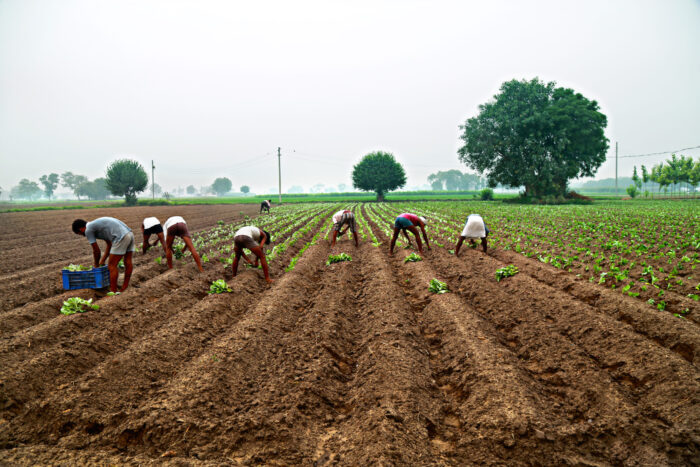
The Union Budget 2026-27 marks a shift in India’s agricultural policy, moving away from an exclusive focus on food grains towards diversified, high-value farming systems that promise better incomes, resilience, and market integration for farming and fishing. With targeted provisions for plantation crops, coastal agriculture, fisheries, and technology-driven advisory systems, the budget positions agriculture as a growth-oriented and entrepreneurial sector rather than a subsistence activity.
At the heart of this transition is the government’s emphasis on high-value agriculture, which has been allocated ₹350 crore in the current Budget. Instead of expanding subsidies for staple crops, the focus is on crops and allied activities that generate higher returns per hectare, integrate better with processing and exports, and create rural employment. Coconut, cashew, cocoa, sandalwood, and premium nuts such as almonds, walnuts, and pine nuts have emerged as the centrepieces of this approach.
In total, the Budget 2026-27 allocates ₹1,62,671 crore for the agriculture sector and allied sectors, up 7% from 2025-26’s revised estimate of ₹1,51,853 — outlining the continued focus on farmer welfare, food security and rural livelihoods. Agriculture’s standalone allocation was ₹1.32 lakh crore.
High-value crops over food grains
Presenting the budget in Parliament on 1 February 2026, finance minister Nirmala Sitharaman highlighted high-value crops as a key lever for improving farmer incomes. The policy intent is to diversify farm output, enhance productivity, and reduce income volatility, especially for small and marginal farmers.
The budget prioritizes coastal regions for plantation-based agriculture, while supporting Agar trees in the Northeast and nut cultivation in hilly and temperate regions. This region-specific crop strategy aligns natural agro-climatic advantages with market demand, allowing farmers to shift from low-return crops to commercially viable alternatives.
While plantation crops have received strong backing, other high-value segments such as fruits, vegetables, and spices have not been explicitly mentioned, despite the horticulture sector contributing nearly 33% to agricultural Gross Value Added (GVA). In 2024–25, horticulture production reached 362.08 million tons, surpassing food grain output, underlining its economic importance.
Push for coconut economy
Among plantation crops, coconut has received special attention. The finance minister announced a dedicated coconut promotion scheme aimed at improving productivity and competitiveness across major coconut-growing states.
India is the world’s largest producer of coconuts, and nearly 30 million people, including about 10 million farmers, depend on the crop for their livelihoods. Many coconut plantations, however, suffer from ageing trees and declining yields. The new scheme proposes interventions such as replacing old and unproductive trees with high-yielding varieties, improving planting material, and promoting better farm practices. For coastal states such as Kerala, Tamil Nadu, Karnataka, Goa, Odisha, and Andhra Pradesh, this initiative could revitalise the coconut economy and strengthen downstream activities like oil extraction, coir products, food processing, and exports.
Cashew, cocoa and sandalwood
The budget also proposes a dedicated program for Indian cashew and cocoa, with the objective of making India self-reliant in raw cashew and cocoa production. At present, India relies significantly on imports for processing, despite being a major player in global cashew markets.
By supporting domestic cultivation, post-harvest processing, and branding, the government aims to enhance export competitiveness and position Indian cashew and cocoa as premium global brands by 2030. For coastal farmers, this could translate into diversified income streams and stronger integration with value chains.
In addition, the government announced partnerships with state governments to promote focused cultivation and post-harvest processing of sandalwood, seeking to restore the traditional strength of the Indian sandalwood ecosystem. Given the crop’s long gestation period but exceptionally high value, this move is expected to attract long-term investment and organised cultivation.
Nuts as a growth frontier
Another significant announcement is the promotion of premium nut cultivation, including walnuts, almonds, and pine nuts. The budget supports orchard rejuvenation and high-density planting to improve yields and encourage value addition.
With rising domestic demand for protein-rich and health-oriented foods, nuts represent a promising opportunity for farmers in hilly regions. The government also sees this segment as a way to engage rural youth in horticulture-linked entrepreneurship, processing, and marketing.
Coastal agriculture and fisheries
Beyond crops, the union budget 2026 places strong emphasis on coastal livelihoods, particularly fisheries, which is recognized as a sunrise sector. Fisheries contribute about 1.2% to national GDP and support nearly three crore livelihoods across marine and inland ecosystems.
The department of fisheries has received its highest-ever allocation of ₹2,761.80 crore, with ₹2,500 crore earmarked for the Pradhan Mantri Matsya Sampada Yojana (PMMSY). A key proposal is the integrated development of 500 reservoirs and Amrit Sarovars to strengthen fishery value chains, especially in coastal areas.
This initiative aims to connect fishermen and fisherwomen and fish farmers with storage, processing, transport, and export markets, reducing post-harvest losses and improving price realisation. Around 200 fisheries start-ups and 34 production and processing clusters are expected to benefit, with a strong role envisaged for women-led groups and Fish Farmer Producer Organisations.
Trade-related measures further support the sector. Fish caught by Indian vessels in the Exclusive Economic Zone and high seas will be made duty-free, while landings at foreign ports will be treated as exports. Additionally, the duty-free import limit for seafood processing inputs has been raised from 1% to 3%, enhancing the competitiveness of India’s value-added seafood exports.
Bharat-VISTAAR
To complement these sectoral investments, the Budget introduces Bharat-VISTAAR (Virtually Integrated System to Access Agricultural Resources) with an allocation of ₹150 crore. This multilingual, AI-enabled platform will integrate ICAR best practices, AgriStack data, and advisory systems to provide farmers with real-time, customized guidance.
From crop selection and pest management to yield optimization and market linkage, Bharat-VISTAAR is expected to reduce risk and improve decision-making. Its success, however, will depend on effective last-mile connectivity, particularly in remote and coastal regions.
Union Budget 2026–27 signals a transition in agricultural policy from low-return staples to high-value crops, from fragmented markets to integrated value chains, and from survival farming to rural entrepreneurship.
The focus on plantation crops, coastal agriculture, fisheries, and technology-driven support reflects an effort to align farming with changing consumption patterns, export opportunities, and climate realities.
The real test will lie in implementation — ensuring access to quality planting material, cold storage, processing infrastructure, and assured markets, while keeping small farmers and fishers at the center.
According to Aashish Kasad, partner and national leader – chemicals and agriculture sector, EY – India, the Union Budget 2026 envisions Indian agriculture as a platform for technology-led resilience, diversification, and income enhancement. “Initiatives such as the multilingual AI-enabled Bharat VISTAAR platform for farm advisory, dedicated programs for high-value crops like coconut, cashew, cocoa and sandalwood, and credit support for livestock and fisheries value chains align with the survey’s emphasis on digital integration, value addition and diversification.
“An allocation of Rs 1.63 lakh crore for agriculture emphasizes the government’s continued commitment to upgrade farm practices and enhance livelihood prospects across rural India. Collectively, the reforms reflect a strategically integrated approach, broadening farmers’ income avenues, deepening rural economic participation, and embedding technology and market access as core drivers of sectoral advancement,” Kasad says in an analysis.
IndiFoodBev — authentic, impactful and influential
An English-language food and beverage processing and packaging industry B2B platform in print and web, IndiFoodBev is in its third year of publication. It is said that the Indian food and beverage industries represent approximately US$ 900 billion in revenues which implies more than 20% of the country’s GDP. Eliminating the wastage on the farmside can help to deliver more protein to a higher number of the population apart from generating sizable exports. The savings in soil, seeds, water, fertilizer, energy and ultimately food and nutrition could be the most immense contribution that country is poised to make to the moderation of climate change.
To improve your marketing and grow sales to the food and beverage processing and packaging industry, talk to us. Our research and consulting company IppStar [www.ippstar.org] can assess your potential and addressable markets in light of the competition. We can discuss marketing, communication, and sales strategies for market entry and growth.
Suppliers and service providers with a strategy and budget for targeted marketing can discuss using our hybrid print, web, video, and social media channels to create brand recognition linked to market relevance. Our technical writers are ready to meet you and your customers for content.
The second largest producer of fruit and vegetables in the world is continuously expanding processing capacities and delivery systems with appropriate innovative technologies. We cover product and consumer trends, nutrition, processing, research, equipment and packaging from farm to thali. Get our 2025 media kit and recalibrate your role in this dynamic market. Enhance your visibility and relevance to existing markets and turn potential customers into conversations. Ask for a sample copy of our bi-monthly in print or our weekly IndiFoodBev eZine each Wednesday.
For editorial info@ippgroup.in — for advertisement ads1@ippgroup.in and for subscriptions subscription@ippgroup.in
Naresh Khanna – 10 February 2025
Subscribe Now