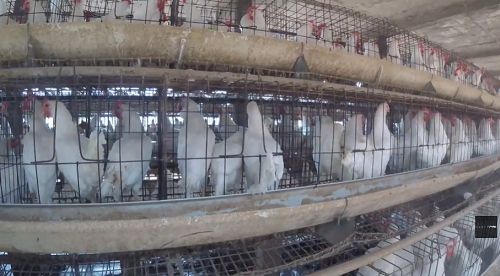
Animal welfare organization Sentient has released findings from an investigation into 21 layer-hen poultry units across Haryana, Punjab, Madhya Pradesh and Tamil Nadu, alleging widespread concerns related to animal welfare, hygiene, waste management and biosecurity.

The investigation covered privately operated poultry farms using battery-cage systems, with estimated capacities ranging from about 3,000 to 200,000 hens. According to Sentient, similar conditions were observed across multiple facilities, suggesting that the concerns identified were not isolated incidents but reflected recurring husbandry and management practices.
Investigators claimed severe overcrowding and fighting among hens, along with widespread injuries. Nearly all observed birds reportedly had injuries around the neck, which investigators attributed to repeated contact with metal cage bars. Other injuries documented included damaged wings, broken legs, bleeding, skin conditions and severe physical weakness, with some hens reportedly unable to stand.
Sentient said debeaking was a routine practice across the facilities visited. Investigators reported observing visible injuries and blood loss associated with the procedure, while in one facility a worker was allegedly seen performing debeaking and invited an investigator to participate.
The investigation also documented what Sentient described as signs of significant distress among the birds, including continuous vocalisation and pronounced fear responses when people approached. Competition and aggression over limited cage space were also observed, with weaker birds reportedly attacked and, in some cases, killed. Investigators further alleged that workers handled some birds roughly, including chicks being thrown and vigorously handled following debeaking.
Hygiene and waste-management practices were another major concern. Sentient reported manure accumulation beneath cages, in some cases remaining throughout an entire production batch. Investigators also observed strong ammonia-like odours, rodents, cockroaches, stagnant water and mosquito larvae at various facilities. Feed at some units reportedly showed visible signs consistent with fungal growth or possible contamination.
Waste-management practices varied between facilities, but investigators reported poorly managed manure and wastewater at several locations. Waste was allegedly found entering or clogging drains, contributing to stagnant or overflowing wastewater, while large quantities of manure were also observed in piles at some sites.
Carcass-disposal methods reportedly included burial, burning and incineration. In one instance, investigators documented a disposal site near a highway where carcasses were allegedly dumped without burial or incineration.
Sentient also reported limited implementation of employee and visitor biosecurity measures. Apparent biosecurity protocols were observed at only one facility, while masks and other personal protective equipment were reportedly unavailable or unused at the remaining sites. Flies, rodents, cockroaches and stagnant water were observed at multiple facilities, raising concerns over vector control and hygiene.
Children were also reportedly observed working at some poultry facilities, including collecting eggs and cleaning premises. Sentient said neither adult workers nor children observed during the visits were equipped with masks or other personal protective equipment.
The investigation further highlighted regulatory and compliance concerns in Madhya Pradesh. According to Sentient, none of the seven facilities investigated in the state reportedly held Consent to Establish or Consent to Operate from the Madhya Pradesh Pollution Control Board (MPPCB). The organization said complaints concerning some facilities had been submitted in 2024, alleging violations of applicable siting criteria and the absence of required consents. Sentient said its 2026 visits indicated limited visible enforcement action beyond the issuance of a general public notice.
“The consistency of what our investigators documented across 21 facilities is deeply concerning. Practices such as severe overcrowding, routine debeaking, untreated injuries, poor waste management and weak biosecurity should not be accepted as business as usual. The findings point to a systemic gap between the standards that are expected and the conditions animals and workers may actually experience on the ground. Stronger enforcement, regular inspections and meaningful accountability are urgently needed to ensure that poultry production does not come at the cost of animal welfare, hygiene or public health,” said Abhishek Pandey, CEO, Sentient.
Following the investigation, Sentient called for stronger implementation and monitoring of existing animal welfare, environmental, public health and poultry-sector regulations. The organisation also urged regular inspections of poultry facilities, improved biosecurity and veterinary support, responsible carcass and waste disposal, better protection for workers and greater accountability for practices that compromise animal welfare and hygiene.
Sentient further recommended continued investigation of poultry facilities and hatcheries, particularly in Madhya Pradesh, to document practices involving debeaking and the reported sourcing and handling of chicks.
IndiFoodBev — authentic, impactful and influential
An English-language food and beverage processing and packaging industry B2B platform in print and web, IndiFoodBev is in its third year of publication. It is said that the Indian food and beverage industries represent approximately US$ 900 billion in revenues which implies more than 20% of the country’s GDP. Eliminating the wastage on the farmside can help to deliver more protein to a higher number of the population apart from generating sizable exports. The savings in soil, seeds, water, fertilizer, energy and ultimately food and nutrition could be the most immense contribution that country is poised to make to the moderation of climate change.
To improve your marketing and grow sales to the food and beverage processing and packaging industry, talk to us. Our research and consulting company IppStar [www.ippstar.org] can assess your potential and addressable markets in light of the competition. We can discuss marketing, communication, and sales strategies for market entry and growth.
Suppliers and service providers with a strategy and budget for targeted marketing can discuss using our hybrid print, web, video, and social media channels to create brand recognition linked to market relevance. Our technical writers are ready to meet you and your customers for content.
The second largest producer of fruit and vegetables in the world is continuously expanding processing capacities and delivery systems with appropriate innovative technologies. We cover product and consumer trends, nutrition, processing, research, equipment and packaging from farm to thali. Get our 2025 media kit and recalibrate your role in this dynamic market. Enhance your visibility and relevance to existing markets and turn potential customers into conversations. Ask for a sample copy of our bi-monthly in print or our weekly IndiFoodBev eZine each Wednesday.
For editorial info@ippgroup.in — for advertisement ads1@ippgroup.in and for subscriptions subscription@ippgroup.in
Naresh Khanna – 10 February 2025
Subscribe Now