A strong food product rarely comes from one function alone. It may start with a chef’s concept, move through R&D formulation, and take shape around a consumer need identified by the brand team. But the idea only becomes commercially viable when it can be made safely, consistently, and efficiently at scale. This is where manufacturing becomes central to innovation.

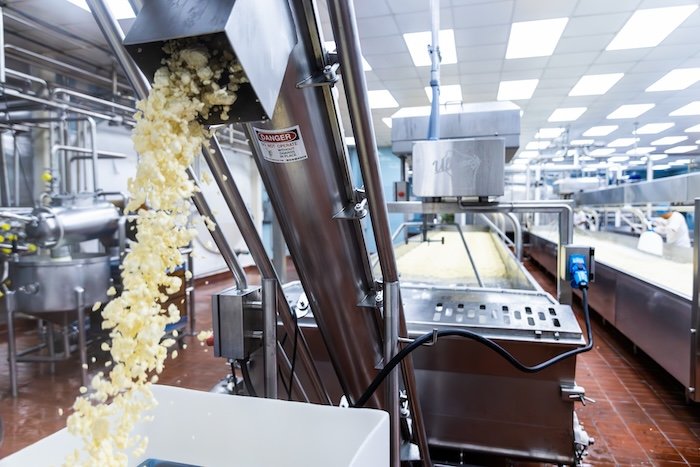
The plant is where a formulation meets the conditions that determine whether it can become a dependable product. Bench samples may capture the intended flavor, but commercial production introduces new pressures: heat, shear, moisture, blending, drying, packaging, storage, and ingredient shelf life. The product still has to satisfy the customer, but it also has to work within the realities of the line, from equipment capabilities and sanitation requirements to labor, sourcing, food safety, and cost.
This is why product development cannot be separated from manufacturing strategy. Culinary creativity still sets the direction, but manufacturing excellence determines whether that direction can hold up in production and reach consumers the same way every time. The eating experience depends on both the idea behind the product and what’s required to make it repeatably.
Manufacturing excellence starts before line trial
In a modern food plant, manufacturing excellence shows up as highly trained teams, reliable equipment, clear standards, sanitation discipline, process control, and food safety systems that protect consistency across production runs. These practices may not be as visible to consumers, but they determine whether the product can live up to its promise and deliver a consistent flavor that becomes part of a brand’s identity.
Manufacturing input is most valuable before those constraints become expensive to fix. When production teams are brought in only after a formula has been finalized, they may be left solving problems that earlier collaboration could have prevented. A product might depend on a processing step the line cannot support efficiently, an ingredient that creates sourcing or sanitation challenges, or a powder, sauce, or seasoning that behaves differently under commercial conditions than it did at the bench. These issues do not signal the original idea will fail, it just might mean the idea needs to be designed with scale in mind.
Manufacturing teams understand how products behave under commercial conditions, including how ingredients move through equipment, how long changeovers take, how sanitation affects scheduling, and where quality risks tend to appear. When that knowledge is part of early development, teams can make better choices before time, materials, and customer expectations are already committed.
That early input becomes especially important in categories where flavor and texture depend on several variables working together. Heat, moisture, fat systems, pH, storage conditions, and packaging can all change how an ingredient performs by the time the product reaches the consumer. A formula that works well in one application may need meaningful adjustment before it can deliver the same flavor, stability, appearance, or texture in another. The strongest development processes treat these variables as part of the product design, not as problems to fix later.
Collaboration for a scalable product
Food manufacturing is cross-functional by nature. R&D, culinary, production, quality, safety, sanitation, procurement, logistics, technical services, customer service, and commercialization teams all see a different part of the risk. When those groups work in sequence, important information can arrive too late. When they work together earlier, the product has a better chance of moving quickly without losing consistency.
The value of this collaboration is not simply that more people are involved. It is that each function can help define success before the product reaches the floor. A plant trial is much more useful when the team already understands the goal, the success criteria, the key risks, and the actions required if something changes. Shared check-ins, clear ownership, and disciplined follow-through allow teams to solve issues together instead of pushing responsibility from one department to another.
This is where manufacturing becomes a strategic part of flavor development. Plant teams are not only asking whether a product can be made. They are helping determine how it should be made so the final product delivers the intended taste, texture, appearance, and reliability. For a snack seasoning, that may mean understanding how a powder flows, adheres, or disperses. For a sauce or dip, it may mean protecting flavor while controlling viscosity and stability. For a frozen entrée or ready meal, it may mean accounting for thermal processing, holding conditions, and reheating performance.
Consumers may never see those decisions, but they experience the result. A product that tastes right once but varies from run to run is not commercially strong. A product that delights in a sample but creates waste, downtime, or rework in production is not fully developed. The better measure of innovation is whether the product can deliver its intended experience repeatedly, safely, and at the required scale.
Reformulating and cost-optimizing
Food manufacturers are balancing pressure from every side: cost control, labor constraints, supply chain volatility, faster development timelines, and growing demand for product variety. Even with those pressures, consumers still expect products to feel distinctive, taste consistent, and deliver the same quality every time.
That creates a difficult balance. Manufacturers often need to reformulate products, optimize costs, or reduce operational complexity without making products feel ordinary. In practice, that may mean reducing unnecessary SKU variation, using more versatile ingredients, improving supplier reliability, or choosing ingredients that deliver several functional and sensory benefits at once. Simplification can support better scheduling, faster changeovers, lower waste, improved service levels, and more efficient labor use.
The risk is oversimplifying in a way that weakens the product. A differentiated food product usually depends on specific sensory cues, whether that is sharp cheddar flavor in a seasoning, creamy dairy notes in a sauce, brightness in a citrus profile, or texture in a ready-to-eat application. Removing complexity from the system should not mean removing what makes the product valuable to the customer.
This is one reason ingredient strategy and manufacturing strategy are increasingly connected. An ingredient is not only a flavor input, it can affect processing, stability, labeling, storage, packaging, line performance, and ingredient shelf life. If an ingredient creates problems in production, the cost of using it may show up as waste, downtime, rework, quality variation, or missed service expectations. If an ingredient is designed with application and manufacturing realities in mind, it can help the product move more smoothly from concept to commercialization.
Bluegrass Ingredients works with food manufacturers at this intersection between product vision and production reality. Across categories such as snacks, sauces, frozen meals, dips, sides, seasonings, and refrigerated foods, the company helps customers think through the factors that determine whether an ingredient solution can succeed beyond the development stage. That includes flavor and aroma, but also texture, appearance, functionality, cost, sourcing, regulatory needs, processing behavior, and application-specific performance.
This kind of support reflects a more consultative role for ingredient partners. Food manufacturers can benefit from not only having a supplier that can provide a powder, concentrate, or seasoning blend, but a partner that understands how those ingredients will behave in the customer’s formula, on the customer’s line, and in the final eating experience. By bringing technical, application, and manufacturing awareness into the process, Bluegrass helps customers make decisions that are creative enough to differentiate the product and practical enough to commercialize.
Quality and safety for innovation
Quality, safety, and sanitation are sometimes treated as final checkpoints, but that view limits their value. When these teams enter the process late, they may be seen as gatekeepers who slow commercialization. When they are involved early, they help the team design a stronger product from the start.
Early input can identify allergen concerns, sanitation requirements, validation needs, labeling issues, equipment-cleaning requirements, and environmental monitoring considerations before they become obstacles. It can also help determine whether a new product fits existing capabilities or requires additional controls. In food manufacturing, these are not secondary details. They shape whether a product can be made safely, repeatedly, and with customer confidence.
This does not make innovation less ambitious. It makes it more complete. A creative product that cannot scale reliably is still unfinished. A product that moves quickly but creates avoidable plant risk is not truly efficient. The goal is to build food products that are exciting to eat and practical to commercialize.
As food companies continue to pursue faster timelines, broader variety, and more differentiated flavor experiences, the strongest products will come from teams that connect creativity with execution early. Whether developing a new product, reformulating an existing one, or optimizing costs, teams must balance the intended eating experience with the realities of manufacturing. The plant floor is not the end of innovation. It is where innovation proves whether it is ready for the customer.
IndiFoodBev — authentic, impactful and influential
An English-language food and beverage processing and packaging industry B2B platform in print and web, IndiFoodBev is in its third year of publication. It is said that the Indian food and beverage industries represent approximately US$ 900 billion in revenues which implies more than 20% of the country’s GDP. Eliminating the wastage on the farmside can help to deliver more protein to a higher number of the population apart from generating sizable exports. The savings in soil, seeds, water, fertilizer, energy and ultimately food and nutrition could be the most immense contribution that country is poised to make to the moderation of climate change.
To improve your marketing and grow sales to the food and beverage processing and packaging industry, talk to us. Our research and consulting company IppStar [www.ippstar.org] can assess your potential and addressable markets in light of the competition. We can discuss marketing, communication, and sales strategies for market entry and growth.
Suppliers and service providers with a strategy and budget for targeted marketing can discuss using our hybrid print, web, video, and social media channels to create brand recognition linked to market relevance. Our technical writers are ready to meet you and your customers for content.
The second largest producer of fruit and vegetables in the world is continuously expanding processing capacities and delivery systems with appropriate innovative technologies. We cover product and consumer trends, nutrition, processing, research, equipment and packaging from farm to thali. Get our 2025 media kit and recalibrate your role in this dynamic market. Enhance your visibility and relevance to existing markets and turn potential customers into conversations. Ask for a sample copy of our bi-monthly in print or our weekly IndiFoodBev eZine each Wednesday.
For editorial info@ippgroup.in — for advertisement ads1@ippgroup.in and for subscriptions subscription@ippgroup.in
Naresh Khanna – 10 February 2025
Subscribe Now