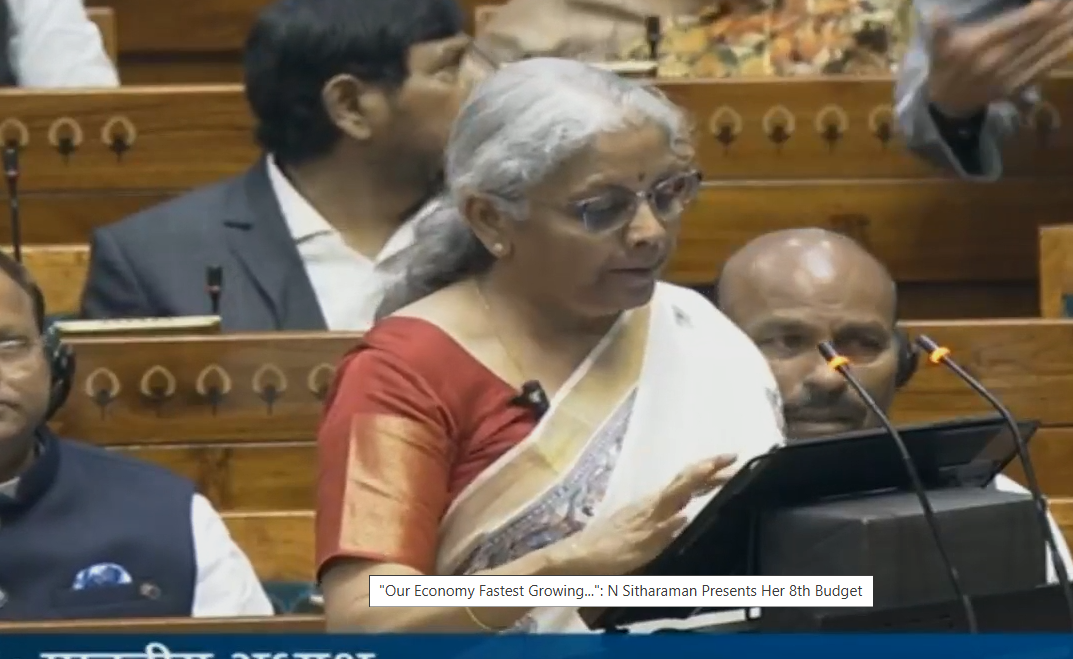
The food, beverage, and allied industries have put forward their wish list for Union Budget 2026, which will be presented by finance minister Nirmala Sitharaman on 1 February 2026.

Pulkit Arora, director and culinary expert, CYK Hospitalities, says in 2026, the industry foresees a decisive shift toward ‘Intentional Hospitality’.
“The industry is moving past multi-cuisine clutter to embrace hyper-specialized micro-concepts, where the origin and texture of food tell a cohesive story. Success now depends on ‘sensory storytelling’, creating spaces that offer a distinct, authentic soul rather than just ‘Instagrammable’ decor.”
In the industry’s view, he says, “the future will be for those brands that focus on depth rather than on the number of people they can reach, providing very personal and sensory experiences that connect with the modern eater emotionally.”

Simranjeet Singh, director and leasing consultant, CYK Hospitalities, says, “In addition to this, the expansion playbook is transforming ‘Metro-First’ to ‘Bharat-First’. The actual growth driver for 2026 is going to be the Tier-2 and Tier-3 cities, where the increasing aspirations are combining with the appetite for premium dining.”
“Our vision is to use lean, tech-enabled franchise models that make luxury available to everyone. This method lets the brands grow quickly in these high-potential markets while still getting good returns on investment without the heavy operational burden that comes with traditional big-format expansions,” Singh says.
Cold chain
Sameer Varma, executive director, ColdStar Logistics, says that in Budget 2026, the industry would like to see cold chain treated as a strategic ‘infrastructure for essentials’, with a sharper policy push that directly improves reliability, lowers wastage, and strengthens healthcare readiness.
Some suggestions include –
* Expanding and simplifying funding windows under PMKSY/Integrated Cold Chain components and complementing them with blended finance/credit enhancement to crowd in private investment

* Creating incentives for energy-efficient refrigeration and thermal-storage retrofits to reduce power-intensity and improve uptime
*Enabling compliance-grade cold distribution for pharmaceuticals through harmonised temperature/traceability standards.
“We hope the government, in consultation with the GST Council, considers rate rationalisation or targeted relief for critical cold-chain assets to accelerate capacity creation, because every rupee saved in logistics cost, compounds into better food security, faster commerce, and safer medicine delivery.”
Recognizing modern warehousing and cold chain as infrastructure rather than a real estate play, investing in logistics-specific skilling of labor and easing regulatory compliance to improve cash flow, are other initiatives that can propel the industry forward, he said.
A move to rationalise 18% GST on cold-chain assets such as refrigerated motor vehicles and refrigerating/freezing equipment, would also be welcome, he said.
“Last year’s Union Budget (2025–26) took positive steps toward overall supply-chain efficiency. However, targeted interventions to reduce end-to-end cold-chain friction for temperature-controlled supply chains of the critical to quick commerce/retail, food, and pharmaceuticals sectors, were some misses.”
Beverage and Alcobev packaging

In words of Paritosh Ladhani, joint managing director, SLMG Beverages, “As we approach Budget 2026, SLMG eagerly anticipates bold measures that will ramp up India’s manufacturing and domestic production ecosystem under the Atmanirbhar Bharat vision. We expect continued emphasis on industrial corridors, enhanced connectivity, and further ease-of-doing-business reforms to attract global investments and integrate Indian industry deeper into global supply chains. Rationalization of GST slabs, especially incentives for sustainable packaging and eco-friendly packaging, will not only reduce costs for the beverage industry but also accelerate our transition toward a circular economy.”
He adds, “Targeted measures to boost rural incomes and consumption will unleash enormous demand potential across tier-2, tier-3 cities and rural markets—the real growth engine of tomorrow. SLMG remains fully committed to this journey of self-reliance and sustainability. With supportive policies in Budget 2026, the Indian beverage industry will not just participate but stand tall in driving India’s next phase of inclusive, high-velocity economic growth.”
Rajesh Khosla, CEO, AGI Greenpac, highlighting key expectations from the packaging and manufacturing sector, stated that the government’s continued focus on strengthening domestic manufacturing and improving ease of doing business has created a strong foundation for sectors such as packaging.
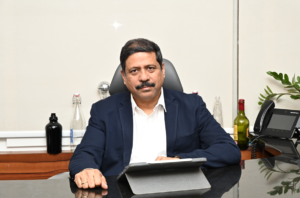
“For glass manufacturers, further rationalization of duties and calibrated safeguard mechanisms on key raw materials like soda ash can help ensure long-term supply stability and support capacity expansion. Glass and aluminium manufacturing are energy-intensive processes, and targeted incentives for energy efficiency, cleaner fuel adoption and technology upgrades will encourage faster transition while improving cost efficiency across the sector,” Khosla says.
“There is also a significant opportunity to further strengthen India’s circular economy. Glass and aluminium are infinitely recyclable, and fiscal support for organised collection, segregation and recycling infrastructure will help increase recycled content, reduce resource dependence, and enhance global competitiveness. Such measures in the upcoming Union Budget will enable packaging manufacturers to invest with confidence and reinforce India’s position as a reliable hub for sustainable glass and aluminium packaging,” he added.
IndiFoodBev — authentic, impactful and influential
An English-language food and beverage processing and packaging industry B2B platform in print and web, IndiFoodBev is in its third year of publication. It is said that the Indian food and beverage industries represent approximately US$ 900 billion in revenues which implies more than 20% of the country’s GDP. Eliminating the wastage on the farmside can help to deliver more protein to a higher number of the population apart from generating sizable exports. The savings in soil, seeds, water, fertilizer, energy and ultimately food and nutrition could be the most immense contribution that country is poised to make to the moderation of climate change.
To improve your marketing and grow sales to the food and beverage processing and packaging industry, talk to us. Our research and consulting company IppStar [www.ippstar.org] can assess your potential and addressable markets in light of the competition. We can discuss marketing, communication, and sales strategies for market entry and growth.
Suppliers and service providers with a strategy and budget for targeted marketing can discuss using our hybrid print, web, video, and social media channels to create brand recognition linked to market relevance. Our technical writers are ready to meet you and your customers for content.
The second largest producer of fruit and vegetables in the world is continuously expanding processing capacities and delivery systems with appropriate innovative technologies. We cover product and consumer trends, nutrition, processing, research, equipment and packaging from farm to thali. Get our 2025 media kit and recalibrate your role in this dynamic market. Enhance your visibility and relevance to existing markets and turn potential customers into conversations. Ask for a sample copy of our bi-monthly in print or our weekly IndiFoodBev eZine each Wednesday.
For editorial info@ippgroup.in — for advertisement ads1@ippgroup.in and for subscriptions subscription@ippgroup.in
Naresh Khanna – 10 February 2025
Subscribe Now