Chemco Group, an international manufacturing and plastic packaging group, said it has received authorization from the Food Safety and Standards Authority of India (FSSAI) to manufacture food-grade recycled PET (rPET) resin for food contact applications under the Food Safety & Standards (Packaging) Regulations, 2018.
The authorization places Chemco among a select group of companies in India approved to manufacture food-grade rPET resin suitable for direct food-contact packaging applications.
According to the company, the approval follows Chemco’s recent commissioning of its large-scale bottle-to-bottle recycling facility in Sanand, Gujarat, representing an investment of approximately ₹125 crore. The integrated facility has been developed to recycle more than 1 billion post-consumer PET bottles annually, converting them into high-quality food-grade recycled PET resin suitable for use in food and beverage packaging applications.
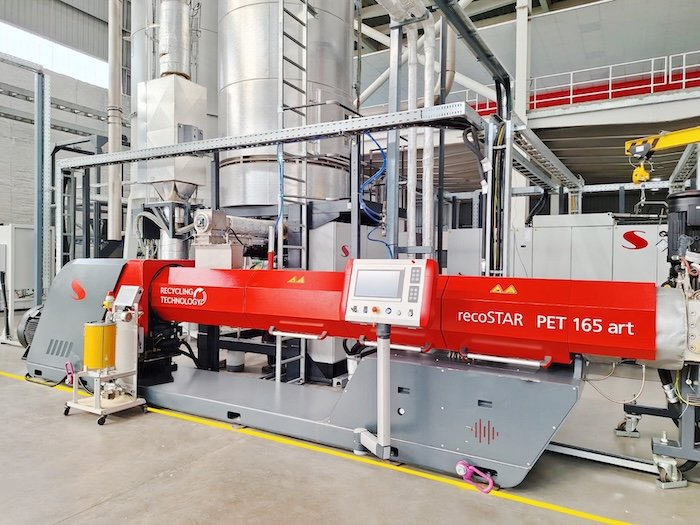
Chemco’s food-grade rPET facility is supported by a Starlinger bottle-to-bottle recycling system. The facility has been developed to meet India’s food-contact regulatory requirements under the Food Safety & Standards (Packaging) Regulations, 2018, along with applicable Bureau of Indian Standards (BIS) requirements governing recycled PET materials.
FSSAI nid for food-contact applications represents a significant regulatory milestone for India’s recycled plastics sector, given the stringent standards governing recycled materials intended for direct contact with food and beverages. Under the Food Safety & Standards (Packaging) Regulations, 2018, manufacturers are required to demonstrate robust traceability, process control, testing, and compliance measures to ensure material safety and suitability for food-contact use.
Commenting on the development, Vaibhav Saraogi, director of Chemco Group, said, “Receiving FSSAI authorization for food-grade rPET is an important milestone not only for Chemco, but also for the broader development of circular packaging infrastructure in India. As demand for compliant recycled content continues to increase, particularly in food and beverage packaging, it becomes essential to build credible domestic manufacturing capabilities supported by regulatory discipline, traceability, and consistent quality standards.”
The approval comes at a particularly important time for India’s packaging industry as mandatory recycled-content obligations under the Plastic Waste Management (PWM) Rules continue to tighten. For Category I rigid plastic packaging, including PET bottles and containers, minimum recycled-content requirements have been prescribed at 40% for FY 2026–27, 50% for FY 2027–28, and 60% from FY 2028–29 onward.
These obligations are expected to significantly increase demand for domestically available, compliant food-grade recycled materials, particularly for beverage, food, and FMCG packaging applications. Industry participants are increasingly seeking reliable local sources of food-grade rPET capable of supporting both regulatory compliance and long-term sustainability commitments.
The Sanand facility has been developed as a fully integrated bottle-to-bottle platform, strengthening Chemco’s ability to support brands with compliant recycled packaging solutions through an end-to-end manufacturing approach.
By combining food-grade rPET resin production with downstream packaging capabilities within the Group, Chemco offers enhanced traceability, supply-chain reliability, and quality consistency. This integrated model positions the Group among very few packaging manufacturers in the world capable of supporting large-scale recycled-content packaging requirements for leading consumer brands.
IndiFoodBev — authentic, impactful and influential
An English-language food and beverage processing and packaging industry B2B platform in print and web, IndiFoodBev is in its third year of publication. It is said that the Indian food and beverage industries represent approximately US$ 900 billion in revenues which implies more than 20% of the country’s GDP. Eliminating the wastage on the farmside can help to deliver more protein to a higher number of the population apart from generating sizable exports. The savings in soil, seeds, water, fertilizer, energy and ultimately food and nutrition could be the most immense contribution that country is poised to make to the moderation of climate change.
To improve your marketing and grow sales to the food and beverage processing and packaging industry, talk to us. Our research and consulting company IppStar [www.ippstar.org] can assess your potential and addressable markets in light of the competition. We can discuss marketing, communication, and sales strategies for market entry and growth.
Suppliers and service providers with a strategy and budget for targeted marketing can discuss using our hybrid print, web, video, and social media channels to create brand recognition linked to market relevance. Our technical writers are ready to meet you and your customers for content.
The second largest producer of fruit and vegetables in the world is continuously expanding processing capacities and delivery systems with appropriate innovative technologies. We cover product and consumer trends, nutrition, processing, research, equipment and packaging from farm to thali. Get our 2025 media kit and recalibrate your role in this dynamic market. Enhance your visibility and relevance to existing markets and turn potential customers into conversations. Ask for a sample copy of our bi-monthly in print or our weekly IndiFoodBev eZine each Wednesday.
For editorial info@ippgroup.in — for advertisement ads1@ippgroup.in and for subscriptions subscription@ippgroup.in
Naresh Khanna – 10 February 2025
Subscribe Now