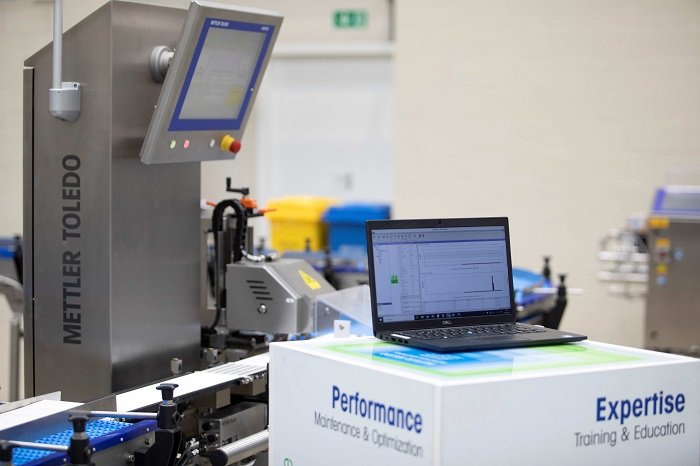
Turning inspection data into real business value is no longer a technical challenge — it is a competitive necessity. Many manufacturers already collect vast amounts of inspection and production data, but when that information remains fragmented across machines, spreadsheets, and manual records, its true potential is lost.
This article explores how centralized data management transforms disconnected data into a single, reliable source of insight that reduces manual effort, improves visibility, and enables faster, more confident decision-making.
By examining practical outcomes — from reduced reporting time and less waste to stronger compliance and multi-site performance benchmarking — this article demonstrates how solutions like ProdX from Mettler Toledo helps manufacturers move beyond data collection to data-driven action. It highlights how organizations can uncover hidden inefficiencies, respond to issues earlier, and create measurable, scalable value across production lines and sites. For manufacturers looking to improve efficiency, strengthen audit readiness, and align teams around a single version of the truth, this is a clear road map for turning inspection data into a sustained operational advantage.
Production lines generate large volumes of information every day, from production volumes and inspection results to rejects, downtime, and performance tests. Yet when that data is spread across individual machines, paper records and disconnected spreadsheets, turning it into useful insight can be slow and resource intensive.

Data management software such as ProdX brings inspection data together in one central platform. This gives production, quality, IT, and management teams a consistent view of what is happening across the line, helping them spend less time gathering information and more time improving performance.
Reducing manual work
One of the clearest benefits to data management software is time. Without a central system, teams may need to copy information from logbooks, export data from individual devices or build reports manually in Excel. These repetitive tasks can take several hours per line each week. By automatically collecting and organising inspection data, software reduces this administrative burden. Scheduled reports, alerts and standard templates can also remove recurring tasks that might otherwise depend on one experienced employee in each plant.
The result is not simply faster reporting. Quality and production teams also have more time to investigate problems, improve processes and support the production line.
Improving visibility and controlling costs
Centralised data also makes it easier to understand where money is being lost. Trends in rejects, rework, waste, and downtime can be identified earlier, before a small issue becomes an expensive recurring problem. For example, if false rejects rise on a particular line or during a specific production run, teams can use the data to investigate the cause and adjust the process. Reducing unnecessary rejects can lower scrap and rework costs while recovering valuable production time.
Centralised data can also reduce the time and pressure involved in reporting and meeting compliance requirements. At Pro Pet Austria, for example, ProdX automatically records production parameters, batch information, reject data and inspection-system performance tests. This has reduced the workload associated with manual records and spreadsheets, while giving quality and production teams more complete information for audits and performance analysis.
Supporting traceability and compliance
Data management software can also strengthen control over production records by providing authorised access, consistent documentation and a complete audit trail. This reduces reliance on paper records, portable storage devices and individual spreadsheets that may be incomplete, duplicated or difficult to retrieve.
When an auditor, retailer or customer requests information, teams can access relevant records much more quickly. The same applies when investigating a complaint. Batch and inspection data can be retrieved in minutes rather than requiring an extensive search across multiple systems.
Creating one version of the truth
When departments maintain separate reports, discussions can become focused on whose figures are correct rather than what action is needed. A central platform gives production, quality, and management teams access to the same information, including measures such as overall equipment effectiveness, reject rates and performance trends. This supports faster, fact-based decisions and helps different functions work towards the same priorities.
For multi-site manufacturers, standard reporting also allows leadership teams to compare plants on a like-for-like basis. Strong performance can be identified and replicated elsewhere, while areas requiring investment become easier to see.
Delivering value at scale
Implementation is typically a one-off project involving system connections, report configuration, training and process development. The value, however, continues every day. Each additional inspection device or connected line removes another separate source of manual data. Reports and templates can then be reused across further lines and sites without multiplying the administrative workload.
Inspection-focused platforms are not intended to replace enterprise resource planning, manufacturing execution or supervisory control systems. Instead, they complement them by providing deeper device-level and quality-event information that production and quality teams can use day to day.
Turning data into lasting value
The return on investment for any given manufacturing site will depend on the size of the operation, the amount of manual work being replaced and how consistently the data is used. For many manufacturers, the value comes from several improvements working together, for example, less time spent preparing reports, lower waste and rework, faster investigations and fewer compliance surprises.
To make that value visible, manufacturers should agree a small set of measures before implementation. These might include false reject rates, waste, rework, reporting time and the time needed to close an investigation. Comparing performance before and after implementation creates a clearer picture of where savings are being made.
Clear ownership, practical training, and agreed processes are also important if the software is to become part of everyday production and quality routines. Once embedded, the benefits can continue to grow as more lines, users and sites are connected.
Ultimately, the real value of data management software lies not simply in collecting more information, but in making that information easier to trust, share and act on. By replacing fragmented records with a clearer view of performance, manufacturers can respond to problems sooner, make better-informed decisions, and turn inspection data into an ongoing business advantage.
Discover how a connected data management strategy can help improve compliance, reduce operational risk, and unlock greater efficiency across your production environment by clicking here.
Ian Scott-Mance is head of digital customer experience, Mettler Toledo
IndiFoodBev — authentic, impactful and influential
An English-language food and beverage processing and packaging industry B2B platform in print and web, IndiFoodBev is in its third year of publication. It is said that the Indian food and beverage industries represent approximately US$ 900 billion in revenues which implies more than 20% of the country’s GDP. Eliminating the wastage on the farmside can help to deliver more protein to a higher number of the population apart from generating sizable exports. The savings in soil, seeds, water, fertilizer, energy and ultimately food and nutrition could be the most immense contribution that country is poised to make to the moderation of climate change.
To improve your marketing and grow sales to the food and beverage processing and packaging industry, talk to us. Our research and consulting company IppStar [www.ippstar.org] can assess your potential and addressable markets in light of the competition. We can discuss marketing, communication, and sales strategies for market entry and growth.
Suppliers and service providers with a strategy and budget for targeted marketing can discuss using our hybrid print, web, video, and social media channels to create brand recognition linked to market relevance. Our technical writers are ready to meet you and your customers for content.
The second largest producer of fruit and vegetables in the world is continuously expanding processing capacities and delivery systems with appropriate innovative technologies. We cover product and consumer trends, nutrition, processing, research, equipment and packaging from farm to thali. Get our 2025 media kit and recalibrate your role in this dynamic market. Enhance your visibility and relevance to existing markets and turn potential customers into conversations. Ask for a sample copy of our bi-monthly in print or our weekly IndiFoodBev eZine each Wednesday.
For editorial info@ippgroup.in — for advertisement ads1@ippgroup.in and for subscriptions subscription@ippgroup.in
Naresh Khanna – 10 February 2025
Subscribe Now