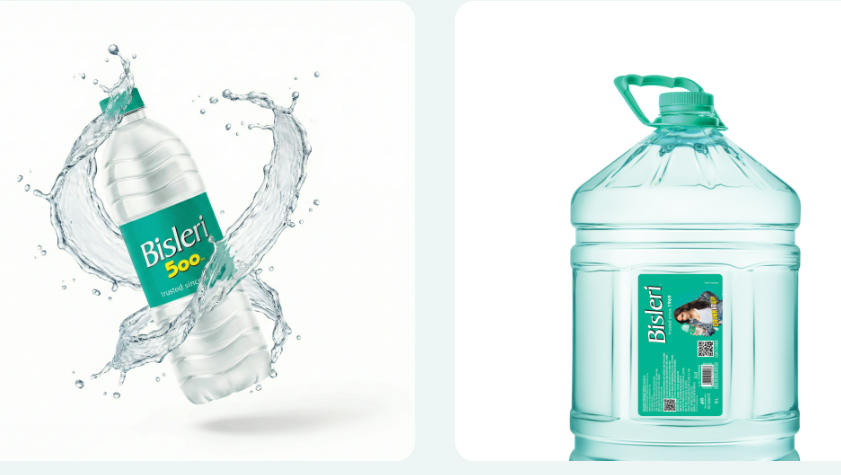
The Food Safety and Standards Authority of India (FSSAI) has sanctioned prosecution against Bisleri International after a regulatory sample of its packaged drinking water failed laboratory tests. The company says the matter concerns a single batch and that its products are safe.
In an announcement on 22 November, FSSAI said a sample collected from Bisleri’s premises exceeded the prescribed limit for bromate. Bromate is a chemical disinfection byproduct linked to potential kidney damage and cancer risks. The sample was declared “unsafe” under the Food Safety and Standards Act, 2006.
Bisleri appealed, and the sample was sent to a referral food laboratory. That lab also declared the water unsafe, this time for polynuclear aromatic hydrocarbons (PAHs), environmental pollutants that are known carcinogens.
The action against Bisleri is part of a broader crackdown. FSSAI also sanctioned prosecution against four other companies: Vasant Masala, Tit-Bit Foods, Mimansa Industries and Asha Confectionery. It also suspended two manufacturing licences over hygiene and compliance violations.
Bisleri’s response
In a statement issued on 23 November, Bisleri said the dispute involves one batch manufactured in September 2025 at its Goa facility, one of 143 plants in its network.
The company said that of six samples collected on 30 September 2025, five met all standards. The sixth recorded 12 micrograms of bromate per liter against a permissible limit of 10. Bisleri said that both the referral lab and an independent FSSAI-approved lab found bromate within limits on retesting, though the referral lab separately flagged PAHs.
Bisleri said it submitted its independent lab findings to FSSAI’s Western Regional Office in February 2026. It said it has not yet received the formal prosecution notice reported in the media, and it maintains that its products remain safe for consumption.
IndiFoodBev — authentic, impactful and influential
An English-language food and beverage processing and packaging industry B2B platform in print and web, IndiFoodBev is in its third year of publication. It is said that the Indian food and beverage industries represent approximately US$ 900 billion in revenues which implies more than 20% of the country’s GDP. Eliminating the wastage on the farmside can help to deliver more protein to a higher number of the population apart from generating sizable exports. The savings in soil, seeds, water, fertilizer, energy and ultimately food and nutrition could be the most immense contribution that country is poised to make to the moderation of climate change.
To improve your marketing and grow sales to the food and beverage processing and packaging industry, talk to us. Our research and consulting company IppStar [www.ippstar.org] can assess your potential and addressable markets in light of the competition. We can discuss marketing, communication, and sales strategies for market entry and growth.
Suppliers and service providers with a strategy and budget for targeted marketing can discuss using our hybrid print, web, video, and social media channels to create brand recognition linked to market relevance. Our technical writers are ready to meet you and your customers for content.
The second largest producer of fruit and vegetables in the world is continuously expanding processing capacities and delivery systems with appropriate innovative technologies. We cover product and consumer trends, nutrition, processing, research, equipment and packaging from farm to thali. Get our 2025 media kit and recalibrate your role in this dynamic market. Enhance your visibility and relevance to existing markets and turn potential customers into conversations. Ask for a sample copy of our bi-monthly in print or our weekly IndiFoodBev eZine each Wednesday.
For editorial info@ippgroup.in — for advertisement ads1@ippgroup.in and for subscriptions subscription@ippgroup.in
Naresh Khanna – 10 February 2025
Subscribe Now