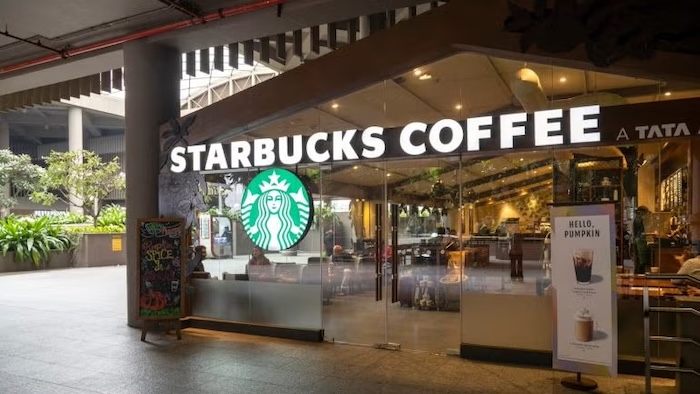
Starbucks is reworking its India strategy after Tata Consumer Products temporarily halted new investments in their 50:50 joint venture, The Economic Times has reported. The pause, the newspaper says, reportedly stems from rising operating costs and concerns over store-level profitability.
According to the report, Tata has questioned the relevance of Starbucks’ global store format in India. The standard 3,000 square feet outlets—capable of producing around 700 cups a day—have not aligned with local cost structures. With beverage prices averaging about Rs 400 and rental costs remaining steep in major metros, the model has become difficult to sustain in a value-conscious market.
To address these challenges, Starbucks CEO Brian Niccol met Tata Sons chairman N Chandrasekaran in Mumbai last week to discuss adjustments to the business model. The discussions reportedly focused on developing smaller, cost-efficient stores designed specifically for Indian conditions. These new formats would involve lighter equipment, fewer staff, and lower fixed costs, potentially accompanied by pricing revisions to attract a wider customer base.
Despite the near-term restructuring, The Economic Times noted that India continues to play a key role in Starbucks’ long-term global plans. During an earlier visit, Niccol described India as a high-potential market where the company is testing varied formats—from compact kiosks to larger cafés catering to longer stays.
The shift marks a strategic attempt to balance brand positioning with local affordability, a challenge global coffee chains have faced in India’s competitive café segment. The next phase of expansion will hinge on how swiftly Starbucks and Tata can implement these changes and achieve sustainable profitability at the store level.
IndiFoodBev — authentic, impactful and influential
An English-language food and beverage processing and packaging industry B2B platform in print and web, IndiFoodBev is in its third year of publication. It is said that the Indian food and beverage industries represent approximately US$ 900 billion in revenues which implies more than 20% of the country’s GDP. Eliminating the wastage on the farmside can help to deliver more protein to a higher number of the population apart from generating sizable exports. The savings in soil, seeds, water, fertilizer, energy and ultimately food and nutrition could be the most immense contribution that country is poised to make to the moderation of climate change.
To improve your marketing and grow sales to the food and beverage processing and packaging industry, talk to us. Our research and consulting company IppStar [www.ippstar.org] can assess your potential and addressable markets in light of the competition. We can discuss marketing, communication, and sales strategies for market entry and growth.
Suppliers and service providers with a strategy and budget for targeted marketing can discuss using our hybrid print, web, video, and social media channels to create brand recognition linked to market relevance. Our technical writers are ready to meet you and your customers for content.
The second largest producer of fruit and vegetables in the world is continuously expanding processing capacities and delivery systems with appropriate innovative technologies. We cover product and consumer trends, nutrition, processing, research, equipment and packaging from farm to thali. Get our 2025 media kit and recalibrate your role in this dynamic market. Enhance your visibility and relevance to existing markets and turn potential customers into conversations. Ask for a sample copy of our bi-monthly in print or our weekly IndiFoodBev eZine each Wednesday.
For editorial info@ippgroup.in — for advertisement ads1@ippgroup.in and for subscriptions subscription@ippgroup.in
Naresh Khanna – 10 February 2025
Subscribe Now