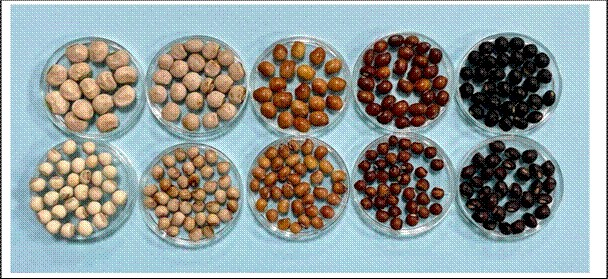
The Indian Council of Agricultural Research (ICAR) has developed what it says is India’s first fully annotated telomere-to-telomere (T2T) reference genome of pigeonpea (Cajanus cajan L. Millsp.) variety ‘Asha’.

Popularly known as ‘Arhar’ or ‘Tur’, pigeonpea is one of India’s most important pulse crops and a major source of dietary protein and plays a vital role in ensuring the country’s food and nutritional security.
The breakthrough builds on the work of ICAR–National Institute for Plant Biotechnology, New Delhi in pigeonpea genomics. In 2011, the institute published the world’s first draft genome of a pulse crop, pigeonpea variety ‘Asha’, which was also the first crop genome to be sequenced entirely in India.
An improved version of the draft genome was published in 2017, and the latest achievement represents its complete telomere-to-telomere (T2T) genome sequence, providing the most comprehensive genetic blueprint of the crop to date.
The newly developed T2T genome sequence contains 752.65 million base pairs of DNA assembled into 92 contigs, providing a complete representation of all 11 chromosomes of pigeonpea. The genome assembly (designated NIPB_CcT2T_4) has been deposited in the global database (NCBI) under accession number GCF_000230855.1 and was released on 20 April 2026.
The genome assembly comprises all 11 chromosomes, including all 11 centromeres and 22 telomeres, demonstrating chromosome-level completeness. A comprehensive genome annotation identified 36,557 genes, producing 48,008 mRNAs (coding sequences).
Transcriptome (RNA sequence) mapping recorded more than 99.9% read alignment, confirming the high accuracy and completeness of the genome.
The fully annotated T2T reference genome marks a significant milestone in India’s pulse research ecosystem. It will serve as a valuable national genomic resource for advanced gene and pangenome analyses, discovery of genes associated with important agronomic and nutritional traits, and the application of molecular breeding and genome-editing technologies.
The development is expected to accelerate the breeding of climate-resilient, high-yielding and nutritionally enriched pigeonpea varieties, thereby strengthening the country’s pulse improvement program. The achievement will provide a major impetus to research and innovation, benefit scientists, breeders and farmers, and contribute to enhanced productivity, improved farmer livelihoods, and India’s food and nutritional security.
The ICAR plays a pivotal role by developing high-yielding, pest-resistant, and climate-resilient pulse varieties, supervising breeder seed production, conducting multi-location trials, demonstrating improved production technologies through its institutes and Krishi Vigyan Kendras (KVKs), and providing scientific support for capacity building and technology dissemination to farmers across the country.
The government of India launched the Mission for ‘Aatmanirbharta in Pulses’ (2025-26 to 2030-31) to achieve self-sufficiency in pulse production, reduce import dependence, and enhance farmers’ income through improved seeds, area expansion, technology adoption, assured procurement, and strengthened post-harvest infrastructure. The mission aims to increase pulse production to about 35 million tonnes by 2030–31 through a comprehensive strategy involving research, seed systems, and extension services.
IndiFoodBev — authentic, impactful and influential
An English-language food and beverage processing and packaging industry B2B platform in print and web, IndiFoodBev is in its third year of publication. It is said that the Indian food and beverage industries represent approximately US$ 900 billion in revenues which implies more than 20% of the country’s GDP. Eliminating the wastage on the farmside can help to deliver more protein to a higher number of the population apart from generating sizable exports. The savings in soil, seeds, water, fertilizer, energy and ultimately food and nutrition could be the most immense contribution that country is poised to make to the moderation of climate change.
To improve your marketing and grow sales to the food and beverage processing and packaging industry, talk to us. Our research and consulting company IppStar [www.ippstar.org] can assess your potential and addressable markets in light of the competition. We can discuss marketing, communication, and sales strategies for market entry and growth.
Suppliers and service providers with a strategy and budget for targeted marketing can discuss using our hybrid print, web, video, and social media channels to create brand recognition linked to market relevance. Our technical writers are ready to meet you and your customers for content.
The second largest producer of fruit and vegetables in the world is continuously expanding processing capacities and delivery systems with appropriate innovative technologies. We cover product and consumer trends, nutrition, processing, research, equipment and packaging from farm to thali. Get our 2025 media kit and recalibrate your role in this dynamic market. Enhance your visibility and relevance to existing markets and turn potential customers into conversations. Ask for a sample copy of our bi-monthly in print or our weekly IndiFoodBev eZine each Wednesday.
For editorial info@ippgroup.in — for advertisement ads1@ippgroup.in and for subscriptions subscription@ippgroup.in
Naresh Khanna – 10 February 2025
Subscribe Now