Food safety standards and regulations across the globe are increasingly aligned. Global Food Safety Initiative recognised schemes such as BRCGS, International Featured Standards (IFS), Food Safety System Certification 22000 (FSSC 22000) and Safe Quality Food (SQF) share the same core foundation. These include Hazard Analysis and Critical Control Points (HACCP), Good Manufacturing Practice (GMP) and a demonstrable commitment to food safety culture. Yet despite this common framework, audits continue to uncover a strikingly consistent set of non-conformities year after year.
Data highlights the scale of the challenge: in 2024 alone, more than 100,000 non-conformities were raised under BRCGS Food Safety Issue 9, with manufacturers averaging just under five findings per audit. Around 59% of these findings fell under Section 4, covering site standards such as premises, equipment condition and hygiene, while Clause 4.11.1, which requires equipment and facilities to be maintained in a clean and hygienic condition, was the single most cited non-conformity in the 2024 to 2025 reporting period. These findings highlight a persistent gap between documented food safety systems and what can be consistently demonstrated during an audit.
While audit outcomes vary by sector, product type and geography, four recurring areas sit behind a large proportion of these findings. The first is the food safety plan itself. Many non-conformities relate to incomplete hazard analysis, poorly defined Critical Control Points (CCPs) or inadequate monitoring of CCPs.
HACCP remains the backbone of food safety management, yet audits frequently reveal confusion around its practical application, particularly when it comes to validation and verification. Manufacturers may treat validation and verification as documentation exercises rather than as proof that controls performance effectively under real operating conditions. Clear process mapping, correctly positioned inspection points and robust data capture all help close this gap and support audit ready records across the seven principles of HACCP.
Hygienic design and GMP form the second major area of concern. Across BRCGS, IFS and SQF audits, hygiene, cleaning and sanitation consistently account for a high proportion of findings. Equipment that is difficult to clean, inspect or maintain increases both contamination risk and audit exposure. Preventive maintenance programmes are often in place, but corrective actions may not be clearly defined or verified for effectiveness. From an audit perspective, hygienic design is not just about materials and surfaces, but about demonstrating that equipment can be cleaned effectively, maintained predictably and returned to service without introducing new risks. Inspection systems designed for washdown environments and hygienic operation support this requirement by reducing both operational and audit complexity.
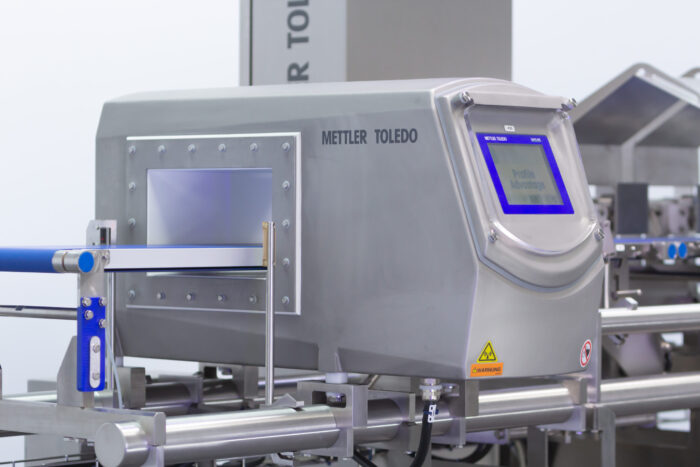
Allergen management and physical contamination control represent the third recurring issue. Mislabelling remains one of the most serious risks facing food manufacturers, with incorrect or missing allergen declarations capable of triggering recalls even where the product itself is safe. Audits also continue to flag weaknesses in foreign body detection and verification. Checkweighing, metal detection, vision and x-ray inspection are increasingly seen as complementary tools, supporting both label accuracy and physical contamination control as part of a risk-based strategy.
Food safety culture underpins all technical controls. Audit data repeatedly highlights gaps in training, competency and supplier oversight. Weak raw material controls, limited understanding of food safety responsibilities and inconsistent adherence to procedures all increase the likelihood of non-conformities. Training, supported by clear processes and measurable controls, remains essential to embedding food safety into day-to-day operations.
Ultimately, audit trends show that most non-conformities are not isolated failures. They are symptoms of food safety systems that lack integration between people, processes and technology. When inspection technologies are selected and positioned based on risk, designed for hygienic operation and supported by meaningful data, they become a core part of the food safety management system rather than a last line of defense. In this way, audits move from repeatedly identifying the same gaps to confirming that effective controls are in place and working as intended.
IndiFoodBev — authentic, impactful and influential
An English-language food and beverage processing and packaging industry B2B platform in print and web, IndiFoodBev is in its third year of publication. It is said that the Indian food and beverage industries represent approximately US$ 900 billion in revenues which implies more than 20% of the country’s GDP. Eliminating the wastage on the farmside can help to deliver more protein to a higher number of the population apart from generating sizable exports. The savings in soil, seeds, water, fertilizer, energy and ultimately food and nutrition could be the most immense contribution that country is poised to make to the moderation of climate change.
To improve your marketing and grow sales to the food and beverage processing and packaging industry, talk to us. Our research and consulting company IppStar [www.ippstar.org] can assess your potential and addressable markets in light of the competition. We can discuss marketing, communication, and sales strategies for market entry and growth.
Suppliers and service providers with a strategy and budget for targeted marketing can discuss using our hybrid print, web, video, and social media channels to create brand recognition linked to market relevance. Our technical writers are ready to meet you and your customers for content.
The second largest producer of fruit and vegetables in the world is continuously expanding processing capacities and delivery systems with appropriate innovative technologies. We cover product and consumer trends, nutrition, processing, research, equipment and packaging from farm to thali. Get our 2025 media kit and recalibrate your role in this dynamic market. Enhance your visibility and relevance to existing markets and turn potential customers into conversations. Ask for a sample copy of our bi-monthly in print or our weekly IndiFoodBev eZine each Wednesday.
For editorial info@ippgroup.in — for advertisement ads1@ippgroup.in and for subscriptions subscription@ippgroup.in
Naresh Khanna – 10 February 2025
Subscribe Now