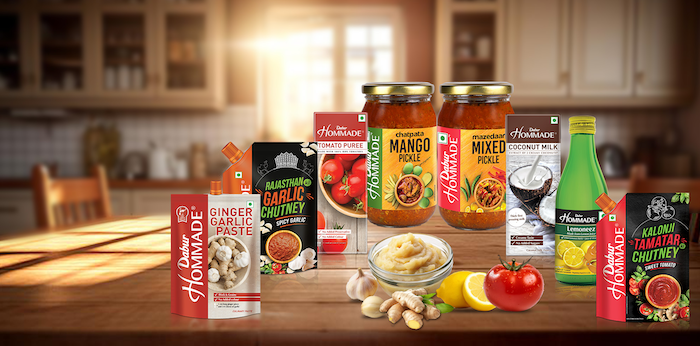
Dabur India has announced its financial results for the quarter ended June 30 2026, delivering resilient and broad-based growth in a challenging operating environment. Dabur India reported 15% surge in net profit at Rs 591 Crore in Q1 of 2026-27, backed by 10.6% jump in consolidated revenue at Rs 3,764 crore. The India FMCG business reported 9.5% growth with an underlying volume growth of 5%.

Commenting on the results, Dabur India global chief executive officer Mohit Malhotra said,”This marks the third straight quarter of double-digit profit growth for Dabur. The quarter unfolded against a backdrop of persistent inflationary pressures, heightened geopolitical uncertainties in the MENA region, and volatile commodity markets. In this hyper-inflationary environment, our disciplined cost management with Project Samriddhi, operational efficiencies and judicious price increases helped report healthy profit growth during the quarter. Dabur ended the first quarter of 2026-27 with an 11% growth in operating profit. Net profit surged 15% to Rs 591 crore.”
Dabur reported strong growth across its key verticals with market share gains across over 90% of the portfolio during the quarter. “Our multi-pronged strategy enabled us to grow margins while continuing to invest in future growth opportunities. Our performance demonstrates that even in uncertain times, consistent execution and consumer-centric innovation remain our strongest growth drivers,” Mr. Malhotra said.
Rural India continues to be a bright spot in the consumption landscape, outperforming urban markets for the eighth consecutive quarter. The gap between urban and rural demand growth has narrowed with urban growth supported by strong performance of modern trade, quick commerce and other emerging channels.
“As per syndicated data, rural demand grew 170 basis points ahead of urban demand in the first quarter, with growth of 6.2% in rural versus 4.6% in urban markets. We believe this reflects a healthy broadening of India’s consumption story across urban and rural India. While the consumption landscape is becoming more balanced, rural demand needs to watched especially in view of El-Nino, patchy monsoons and rising inflationary pressures,” Malhotra added.
Our strategic focus on premiumisation and innovation continued to yield strong results as the premium brands grew at twice the pace of regular brands, underscoring the strength of our prestige offerings and the growing consumer appetite for higher-value products. Innovation also remained a key contributor to growth, with new products accounting for 2.6% of Revenue.
“Recent launches such as Siens and Cheers have strengthened our presence in fast-evolving consumer segments and demonstrated our ability to identify and address emerging consumer needs. Going forward, we see premiumisation playing an increasingly important role in shaping the next phase of Dabur’s growth story, while driving both market expansion and margin enhancement,” Malhotra said.
Category Growth
The quarter underscored the strength of Dabur’s diversified portfolio, with each of our three business verticals – Home & Personal Care (HPC), Healthcare and Food & Beverages (F&B) – contributing meaningfully to growth. While the HPC business posted a strong 12.3 growth, the F&B business grew by 7.2% and the Healthcare vertical reported a 5.5% growth. “The broad-based nature of this performance reflects the enduring consumer preference for our brands, the effectiveness of our innovation pipeline and the agility of our execution. Together, these businesses continue to create a diversified and resilient growth engine for Dabur,” he said.
Within the HPC portfolio, the Shampoo business emerged as the strongest performer during the quarter reporting a 23% growth. The Hair Oils category also reported a robust performance, growing by 17.6%. The Oral Care business showed a 9% gain during the quarter.
The toothpowder business accelerated by 13.1% in Q1. The Skin & Salon portfolio, led by across-the-board gain in Gulabari, Fem and OxyLife brands, ended the quarter with an 8.1% growth, while the Home Care business posted a 6% rise despite supply chain disruptions due to the Middle East war.
In Healthcare, Digestives portfolio grew by 11.2% with all three brands – Hajmola Tablets, Isabgol and PudinHara growing at strong double digits. Within the OTC business, brand Honitus grew by 28% and Health juices by 24%. In the Health Supplements business, our flagship brand Dabur Honey reported an 8% growth.
The Foods category ended Q1 up 29.2% and the Badshah business grew by 13.2%. Despite a challenging start to the season due to rain-led demand disruptions, our Beverages business recovered strongly over the remainder of the quarter and returned to the positive territory with mid-single-digit growth in Q1. Our premium beverage portfolio continues to gain scale, with Real Activ Juices growing 42% and Coconut Water growing 73% during Q1. The strong traction in these categories reinforces our confidence in the long-term opportunity within health and wellness-led beverage segments.
International Business Growth
Dabur’s International Business reported a 15.5% growth in INR terms. The Bangladesh business reported a 34.3% growth while the Egypt business grew by 28.4%. Our Sub-Saharan Africa business improved by 28% while the Turkey business grew by 26.9%, the UK by 21.9%. MENA business reported an 8.6% growth despite war-related disruptions in the region.
IndiFoodBev — authentic, impactful and influential
An English-language food and beverage processing and packaging industry B2B platform in print and web, IndiFoodBev is in its third year of publication. It is said that the Indian food and beverage industries represent approximately US$ 900 billion in revenues which implies more than 20% of the country’s GDP. Eliminating the wastage on the farmside can help to deliver more protein to a higher number of the population apart from generating sizable exports. The savings in soil, seeds, water, fertilizer, energy and ultimately food and nutrition could be the most immense contribution that country is poised to make to the moderation of climate change.
To improve your marketing and grow sales to the food and beverage processing and packaging industry, talk to us. Our research and consulting company IppStar [www.ippstar.org] can assess your potential and addressable markets in light of the competition. We can discuss marketing, communication, and sales strategies for market entry and growth.
Suppliers and service providers with a strategy and budget for targeted marketing can discuss using our hybrid print, web, video, and social media channels to create brand recognition linked to market relevance. Our technical writers are ready to meet you and your customers for content.
The second largest producer of fruit and vegetables in the world is continuously expanding processing capacities and delivery systems with appropriate innovative technologies. We cover product and consumer trends, nutrition, processing, research, equipment and packaging from farm to thali. Get our 2025 media kit and recalibrate your role in this dynamic market. Enhance your visibility and relevance to existing markets and turn potential customers into conversations. Ask for a sample copy of our bi-monthly in print or our weekly IndiFoodBev eZine each Wednesday.
For editorial info@ippgroup.in — for advertisement ads1@ippgroup.in and for subscriptions subscription@ippgroup.in
Naresh Khanna – 10 February 2025
Subscribe Now